

Discovery: a process to bring companies into the digital era
We have entered the true digital era, where customer experience is central, customer needs are increasingly complex, competition is global and technology is evolving faster than ever. Our Discovery process responds to these challenges and puts companies back in control of their own destiny.
We have entered the true digital era, where customer experience is central, customer needs are increasingly complex, competition is global and technology is evolving faster than ever. Our Discovery process responds to these challenges and puts companies back in control of their own destiny.


Over the past fifteen years we have built web software of every shape and size. Fifteen years is no small amount of time, and we can safely say that our days as a bunch of brash, cocky young geek ninjas are behind us! Maturity also lets us take a clearer look at the context we have helped shape.
Cantiere Creativo's clients vary widely in both size and market. We have worked with large companies in telecommunications, automotive, fashion, museums, publishing and manufacturing; at the same time, we have collaborated with countless startups, some worth millions and others bootstrapped, some techno-cool and others wonderfully quirky! Either way, we have always had one thing in mind: how can we help our clients?
Welcome to the third digital era
One of the analyses by Gartner©, which I agree with, divides the last twenty years of IT into three eras.
- IT craftsmanship: the first era, when value was created through industrial automation, management software and technologies that were often isolated both within the company and from the rest of the world.
- IT industrialization: the second, when the first solutions appeared that aimed to improve efficiency by focusing more on internal processes to improve employees' work.
- The digital era: the current one, in which IT is called on to help transform business models, ideally sparking new ones and putting customers at the center. That's why we hear more and more about user-centered, customer-centric, customer experience and so on.
The common thread, seemingly obvious, is always the same: the business has to work.
So the question we ask ourselves today is more precise: with our skills, how can we help our clients' customers?
The Cantiere Creativo team was very attentive to the many needs of the Uffizi and gave us all the technical support we needed to reach our goal. We greatly appreciated their innovative, user-friendly approach.
— Eike Schmidt, Director of the Gallerie degli Uffizi
Lots of pressure, little technological progress
Covid, inevitably, has undoubtedly accelerated a process that was perhaps timid but had been under way for years: going paperless, remote work, data centralization and analysis, performance optimization, to name just a few, suddenly became priorities.
Anyone looking for solutions faces a fragmented, confusing technology landscape. You'll say we've been hearing that for years; my point is that not only is it true, it's actually getting worse!
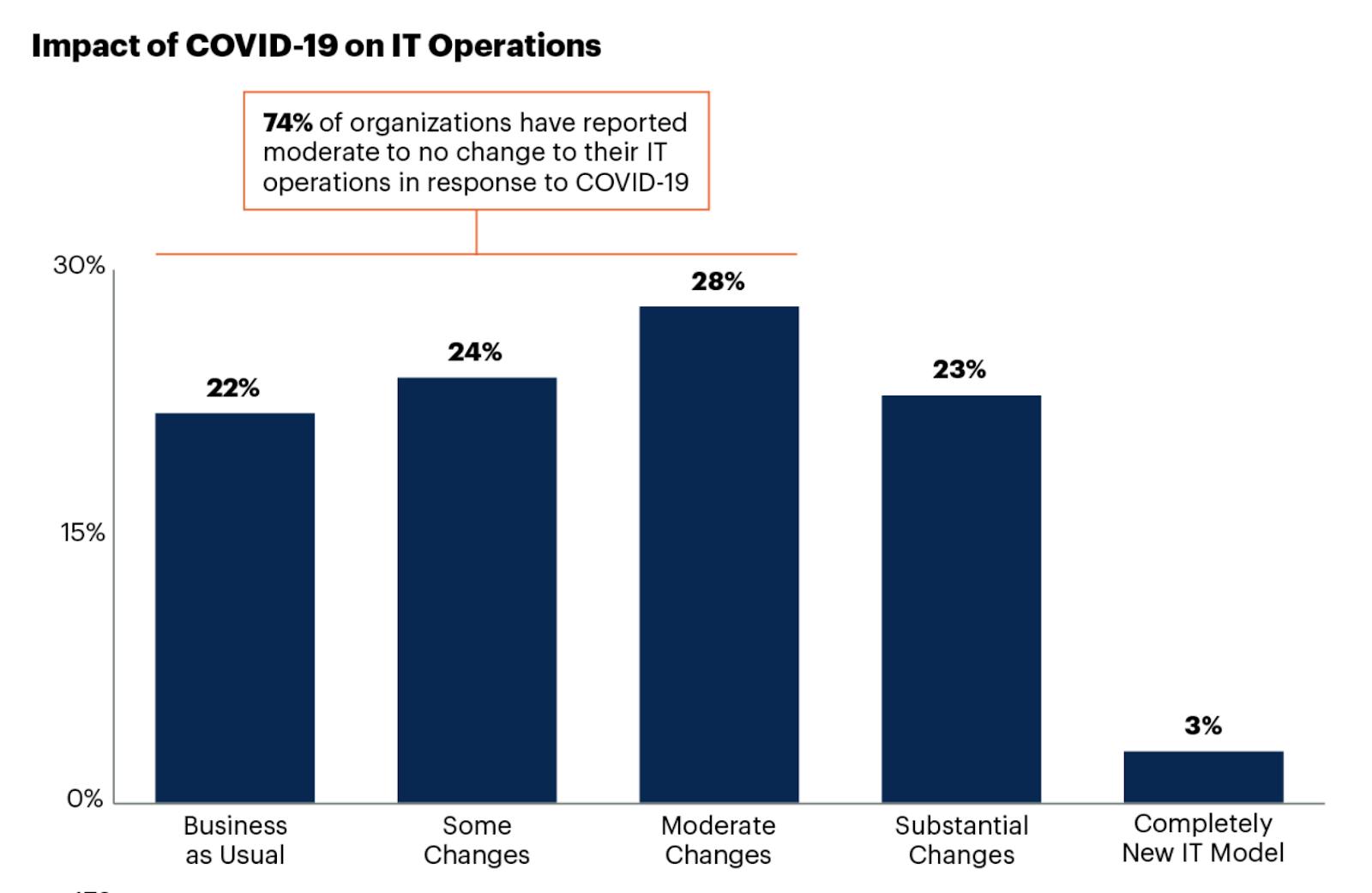
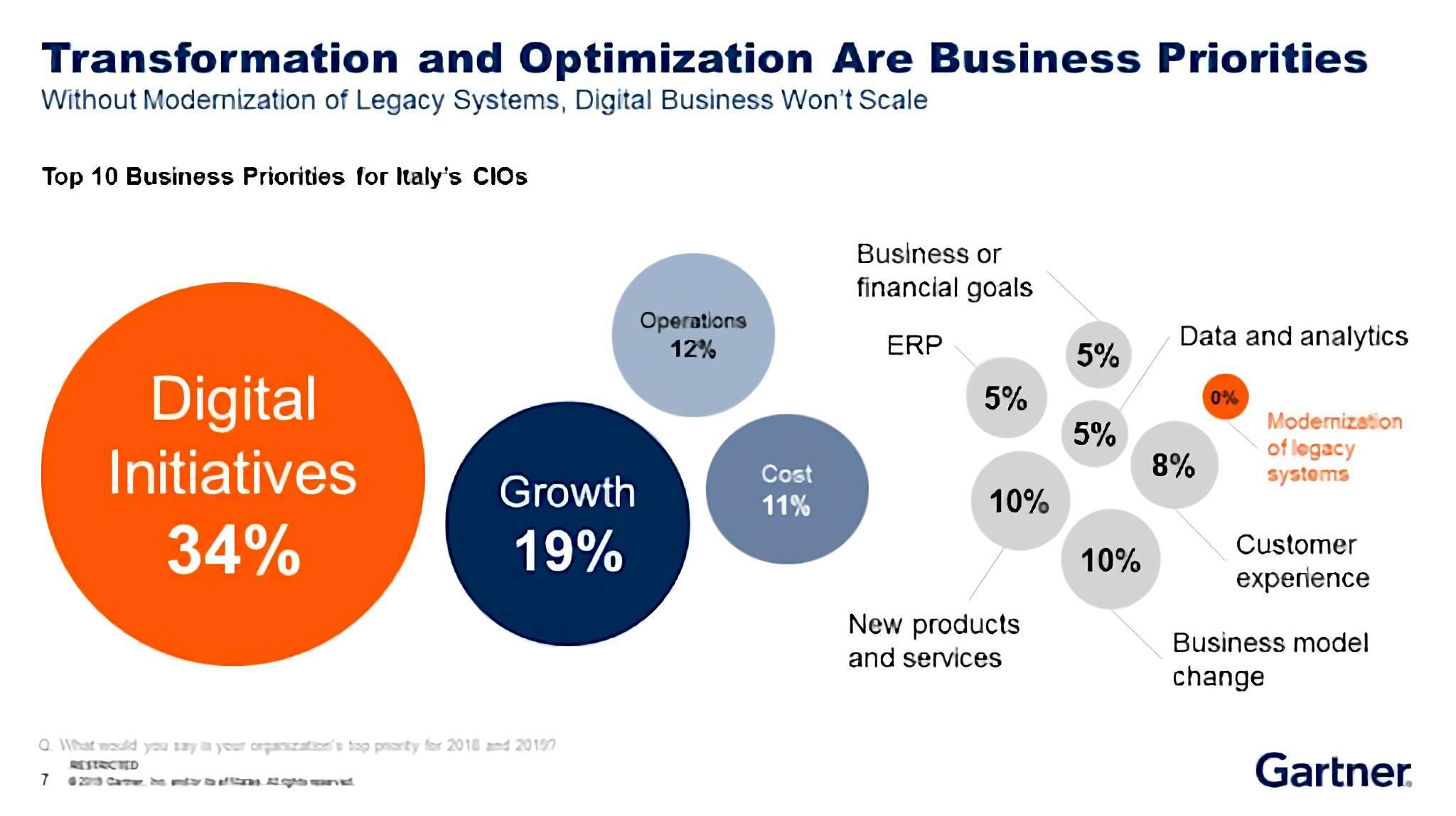
On the other side we find technological inertia, and Gartner© data is very clear on this: 74% of companies say they have done little or nothing, and «without modernizing and transforming legacy systems, companies cannot scale, and with the acceleration and pressure they face at this particular moment in history, they will not be able to grow».


The hard road from idea to value
People inside companies who champion these issues face an uphill battle to justify the costs and, in a climate of tight budgets, anyone who can't effectively demonstrate the value of digital transformation risks reducing IT to a mere tool, a cost center to be managed rather than a profitable investment to be supported.
Even to the most tech-savvy clients, it's hard to explain concepts like Headless, PWA or Serverless, all of them recent and perhaps destined to be replaced by others born two days later.
We try to guide our clients through a jungle that, rightly, they have no interest in. Their interest is always the same: what value do we get?
Sometimes our contacts struggle to justify budgets and support new investments, because the value IT delivers isn't clear within their industries. Tough economic conditions add pressure, and the ability to demonstrate digital's positive financial impact becomes even more critical.
Experience in earlier eras may at times have been painful: unmet expectations, budgets out of control, difficulty finding the right skills, solutions that actually made worse the very problems they were meant to solve, entire departments at odds with one another, and so on.
Wrong choices, unknowns, poor risk assessment and idealistic designs, perhaps excellent on paper, go nowhere once they land in the hands of developers who don't know the reasons behind what they're building and are forced to guess, interpret and build something without judgment or awareness. On the other side, we see designers and marketers suffering as they watch a product drift far from what was conceived or designed.
Without speed, you can't compete
Fortunately, the IT world has also learned a great deal from one of the best training grounds in the world: startups. Setting aside the venture capitalists and the financial logic that drives the startup scene, industry, SMEs and even the largest companies have a lot to learn from those small companies that sometimes become "unicorns": fearsome, unstoppable competitors whose lethal weapon is speed.
They are fast at prototyping, designing, developing and testing; they are quick to change ideas, strategy, team and skills. Add the ability to listen to users and adapt quickly, and the customer experiences they create become prohibitively hard for established companies to replicate.
Fifteen years of working with startups have taught us a lot about speed and have allowed us to shape a method and a culture that we naturally bring to industry. Today's era calls for working with our clients in full synergy, with a medium- to long-term vision, going beyond consulting and/or supplier work; it means working closely with CIOs, or IT and marketing managers in general, who today need to re-engineer the business with a digital-by-design approach and plan implementations that are tightly connected to business goals.
The first step: Discovery
That's why we created the concept of Discovery at Cantiere, an approach that, at the outset, drastically reduces a project's unknowns, risks and gray areas in order to minimize time-to-market and optimize budgets during operational development over the long term.
Its flexible nature fits every type of digital project, regardless of size. Unlike traditional design, Discovery avoids focusing prematurely on details and specifications, and tackles the biggest critical issues through research, analysis, testing and the development of working proofs of concept. This reduces the risks that all too often ruin everyone's dreams, as glaring at the end as they are invisible at the start.
Over time we have learned that a multidisciplinary team is essential: engineers, graphic designers, UX designers, marketers, clients and consultants must work together to observe and understand the different facets of a project and then build it hands-on, avoiding handoffs between departments or, worse still, between suppliers.
When we explain the process to clients, some are wary of ending up with a result that's too abstract.
On the contrary, the Discovery delivers extremely concrete, tangible results:
- digitized research material;
- user research;
- working prototypes or software solutions;
- concept design;
- information architecture;
- technology choices.
Its phases lead us to a deep understanding of the company, its business goals, and its customers' problems and expectations. It lets us critically examine everything already in place, from technology and infrastructure to user research. The team then works on creative solutions to the problems identified.
Rather than getting lost in the details, we define the boundaries within which it makes sense to stay. The most critical parts are verified: we test third-party APIs and write working code to validate an idea. Everything takes shape, allowing us to plan one or more releases with the goal of reaching the market as soon as possible.

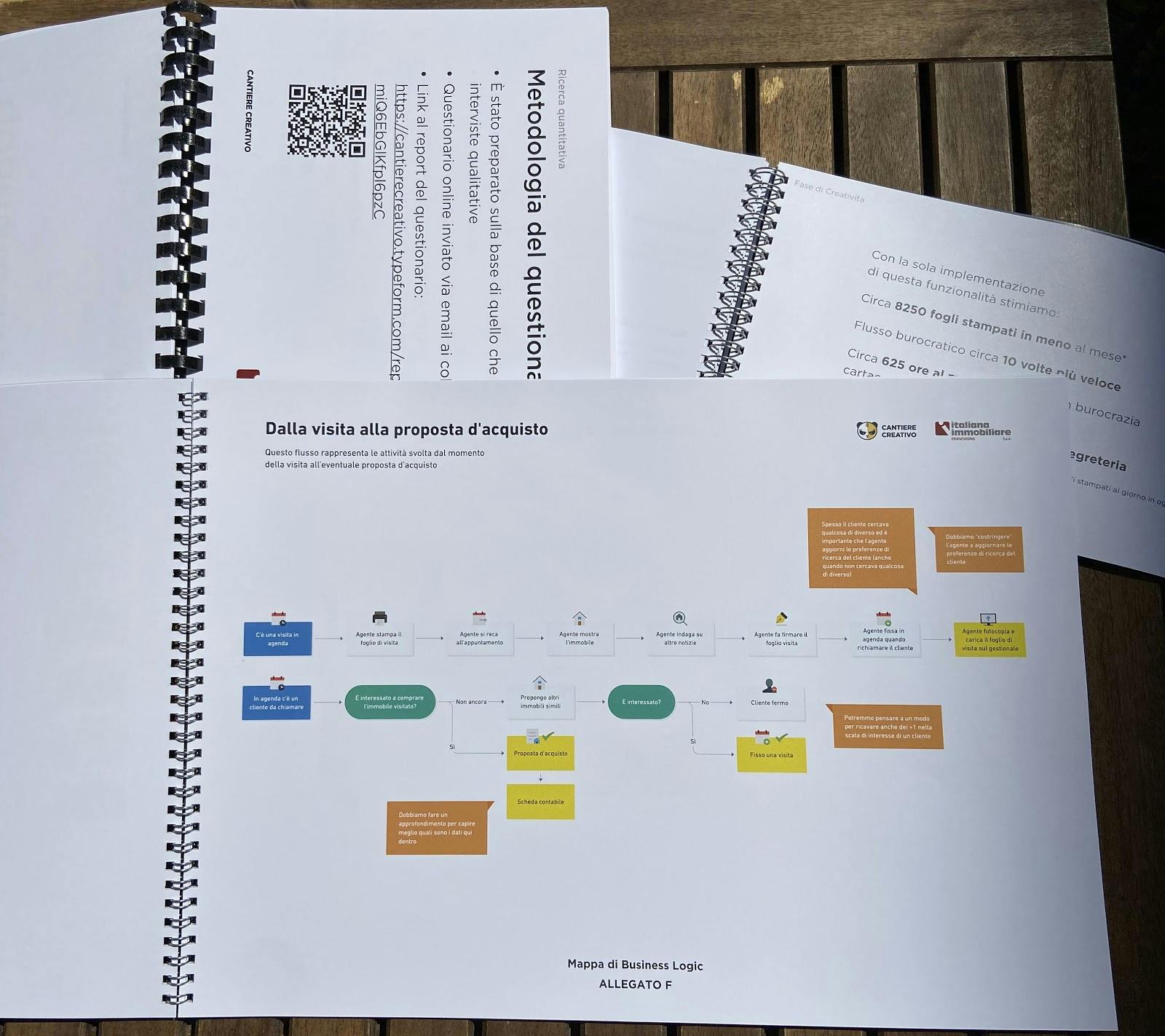
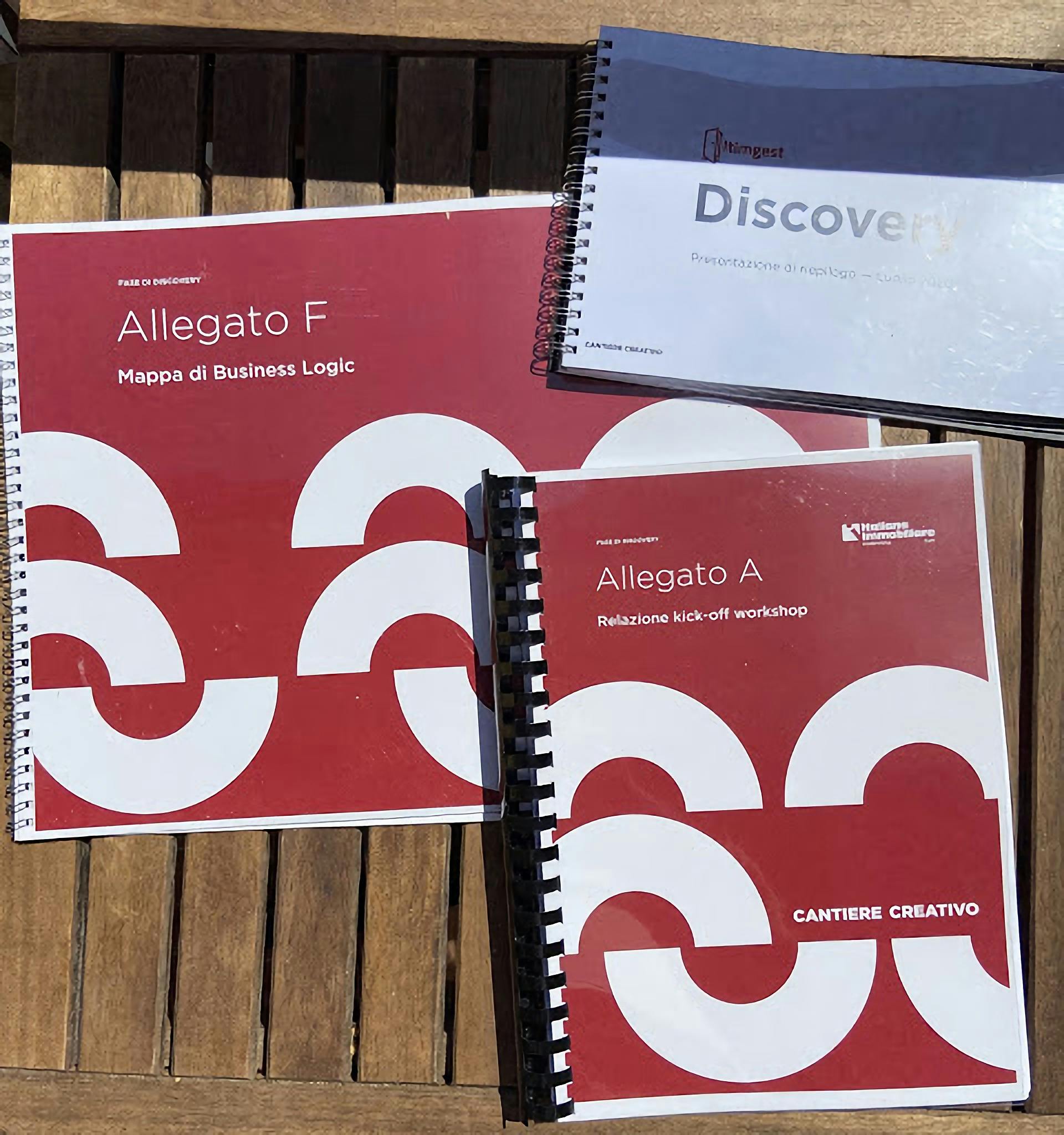
And, just as important, the entire process can be carried out fully remotely. It was during last spring's lockdown and the following phase of the crisis that we ran our two most important Discoveries: for the Gallerie degli Uffizi and for the new digital franchise management system of Italiana Immobiliare.
Cantiere took the right direction and understood the specifics of what we wanted. The professionalism we sensed in the initial phase certainly materialized in this study.
— Lorenzo Coppoli, President, Italiana Immobiliare

Since the entire project is built around business goals, whether financial or efficiency-related, we are able to monitor results, quantitative and otherwise, and step in quickly with strategic changes.
It's not black magic, and there are no false promises: we know how much this process reduces risk and accelerates opportunities, creating value over time.
Once the goals are understood, thanks to tangible, measurable results and with a solid technology foundation in place, the most suitable next steps can be chosen.
A digitalization process aimed at creating value, once started, never really ends, and it necessarily requires strong, trust-based partnerships that go beyond supplier relationships as we have known them until now.


