

European Accessibility Act 2025: How to Comply
The European Accessibility Act is a watershed moment for the EU digital landscape. Starting in late June 2025, all digital products and services placed on the European market must meet specific accessibility requirements. Non-compliance can lead to severe penalties of up to several thousand euros.
If your company hasn't taken steps to comply yet, the time to act is now!
In this article, you'll learn what the European Accessibility Act covers, who it applies to, its main provisions and how to become compliant.
The European Accessibility Act is a watershed moment for the EU digital landscape. Starting in late June 2025, all digital products and services placed on the European market must meet specific accessibility requirements. Non-compliance can lead to severe penalties of up to several thousand euros.
If your company hasn't taken steps to comply yet, the time to act is now!
In this article, you'll learn what the European Accessibility Act covers, who it applies to, its main provisions and how to become compliant.


- European Accessibility Act 2025: the EU directive on web accessibility
- Who does the European Accessibility Act apply to?
- Why the EAA is a turning point
- What happens if you don't comply with the European Accessibility Act?
- Measures required by the 2025 European Accessibility Act
- How to become compliant
- Accessibility at Cantiere Creativo
- Conclusions
European Accessibility Act 2025: the EU directive on web accessibility
The European Accessibility Act (in Italian, “Direttiva Europea sull'Accessibilità”), EAA for short and formally Directive (EU) 2019/882, is a law adopted by the European Union on April 17, 2019. Its purpose is to ensure that products and services in Europe, both public and private, are accessible to all users, including people with disabilities. That is exactly the definition of accessibility.
The directive is a crucial step toward social inclusion, improving access to public transportation, banking services, e-commerce, e-books and tech devices. Starting June 28, 2025 (which is why it's also called EAA 2025), all companies will be required to guarantee minimum accessibility levels for new products and services covered by the law.
Member States began transposing the EAA in 2022, each free to choose how to implement it. In Italy, the EAA was transposed through Legislative Decree No. 82 of May 27, 2022, which came into force on July 16, 2022, officially making it part of the national legal framework.
Who does the European Accessibility Act apply to?
The European Accessibility Act specifies the companies, products and services covered by the directive. In Italy, these provisions were transposed and adapted to the national context through Legislative Decree No. 82 of May 27, 2022.
Companies covered by the directive
The EAA requires all companies, public and private, that make products or offer services covered by the law to comply with its specifications. However, Member States may provide for certain special exemptions (more on these below).
Now let's look at which products and services the directive regulates, according to the Italian Legislative Decree!
Products
The products listed in Article 1, paragraph 2, of Legislative Decree 82/2022 are:
- consumer general-purpose computer hardware systems and the operating systems for those hardware systems;
- self-service payment terminals and terminals dedicated to providing the services governed by this decree, such as automated teller machines (ATMs), ticketing machines, check-in machines and interactive self-service information terminals (excluding terminals installed in vehicles);
- consumer terminal equipment with interactive computing capability used for electronic communications services;
- consumer terminal equipment with interactive computing capability used to access audiovisual media services;
- e-readers.
Services
The services listed in Article 1, paragraph 3, of Legislative Decree 82/2022 are:
- electronic communications services, except transmission services used for the provision of machine-to-machine services;
- services providing access to audiovisual media services;
- the following elements of air, bus, rail and waterborne passenger transport services, including urban, suburban and regional transport services:
- websites;
- mobile device-based services, including mobile apps;
- electronic tickets and electronic ticketing services;
- delivery of transport service information, including real-time travel information; for information screens, this is limited to interactive screens located within the territory of the Union;
- interactive self-service terminals located within the territory of the Union, except those installed as integrated parts of vehicles, aircraft, ships or rolling stock used in the provision of any part of such passenger transport services;
- consumer banking services;
- e-books and dedicated software;
- e-commerce services.
Exemptions
While the European Accessibility Act (EAA) encourages all companies to follow accessibility rules, Article 3, paragraph 3, of Legislative Decree 82/2022 provides a specific exemption for microenterprises, meaning companies with fewer than 10 employees and annual revenue under 2 million euros.
In addition, Article 1, paragraph 5, of Legislative Decree 82/2022 specifies that the decree does not apply to the following website and mobile app content:
- pre-recorded time-based media published before June 28, 2025;
- office file formats published before June 28, 2025;
- online maps and mapping services, provided that, for maps intended for navigation, essential information is provided in an accessible digital format;
- third-party content that is neither funded nor developed by, nor under the control of, the economic operator concerned;
- website and mobile app content considered archives, meaning it only contains content that has not been updated or edited after June 28, 2025.
Why the EAA is a turning point
According to Eurostat estimates, 27% of the EU population over 16 lives with some form of disability. That's around 101 million people, or one in four adults in the European Union.
In Italy, nearly 13 million people live with a disability, more than 3 million of them with a severe disability. Overall, that's about 22% of the Italian population, just over one Italian in five.
These numbers alone show why the European Accessibility Act matters. It's no coincidence that the directive's core principle is making accessibility an essential condition for equal participation in society.
The hope is that this will benefit both businesses and consumers. For businesses, especially SMEs, the directive aims to simplify trade within the EU. For consumers, the goal is to drive innovation toward a more inclusive society. The new accessibility requirements aim to improve the user experience for everyone, with a particular focus on digital tools and websites.
So even though Legislative Decree 82/2022 exempts microenterprises, the EU's direction is clear: accessibility is set to become mandatory for every company in the future. Even if the decree doesn't apply to you, acting now means getting ready for a more inclusive and competitive market.
What happens if you don't comply with the European Accessibility Act?
The compliance deadline is June 28, 2025. From that date, all products and services placed on the EU market and regulated by Legislative Decree 82/2022 must meet specific accessibility requirements.
Companies that fail to comply face penalties ranging from 5,000 to 40,000 euros, depending on the severity of the violation, the number of non-compliant products or services and the number of users affected.
Measures required by the 2025 European Accessibility Act
Accessibility requirements for physical products are beyond the scope of this article. For more information, see Annex I of Legislative Decree 82/2022.
For website accessibility, the reference standard for EAA compliance is EN 301 549. It sets out functional accessibility requirements for ICT products and services, along with descriptions of the test procedures and evaluation methods for meeting them.
In general, to comply with EN 301 549 and the European Accessibility Act (and therefore Legislative Decree 82/2022), a website, web application or mobile app must follow the W3C WCAG 2.1 Level AA guidelines. Among many other things, they include:
- a color contrast ratio of at least 4.5:1 in most cases;
- alternative text for images, in case they don't load correctly;
- consistent navigation across the entire site;
- accurate labels for form fields;
- sites that work with screen readers;
- a logical, orderly use of headings on the page.
Although some EN 301 549 rules differ slightly from the WCAG 2.1 requirements, WCAG clearly remains the foundation of the standard. For the full list of requirements, we recommend reading the official document on the International Web Association website.
How to become compliant
The first step toward EAA compliance is checking whether your website meets at least WCAG 2.1 Level AA. Judging it “by eye” is hard, especially if you're not an expert.
That's why the W3C, the consortium that created the WCAG standard, supports tools like AccessibilityChecker.org, a free platform that runs an automated scan to detect WCAG 2.1 compliance issues.
So, first of all, run a preliminary test on AccessibilityChecker.org or similar tools to analyze your site. Even if it passes, it's still a good idea to consult accessibility experts to assess compliance with the specific requirements of EN 301 549 and the European Accessibility Act.
If your site does NOT pass the test, you need to act quickly to comply by June 28, 2025 and avoid penalties that can reach thousands of euros. In that case, the possible steps are:
- Work with web accessibility experts: partnering with professionals who specialize in digital accessibility is the most efficient and effective way to identify issues, implement best practices and tackle the specific challenges the law poses.
- Invest in accessibility training: Accessibility is a moving target, because the technologies we use to access and interact with web pages keep evolving. As a result, regulations are updated regularly too. If you choose to handle compliance in-house, ongoing training is essential to keep your development team up to date and able to implement solutions that meet the specifications.
In general, accessibility planning should be a key part of a company's business strategy. That means allocating adequate budget and resources for the necessary updates, whether they're implemented in-house or by external partners.
One of the most common fears among companies is that making a site accessible will hurt its look or appeal. That's a myth worth busting: an accessible site can be beautiful!
Accessibility at Cantiere Creativo
Cantiere Creativo is a digital partner with years of experience creating custom web experiences.


Accessibility is one of our core company values and guides every project, following the Web Content Accessibility Guidelines (WCAG). For more details, see our guide to building accessible digital products.
For our team, complying with accessibility regulations isn't just an obligation but an ethical and social commitment to a more inclusive web. This approach has allowed us to work with organizations across many industries, from luxury to public administration, from museums to conferences, delivering innovative digital solutions that meet accessibility standards.
Here's a selection of projects we've built that meet the AA accessibility level required by the EAA.
Museo Ginori

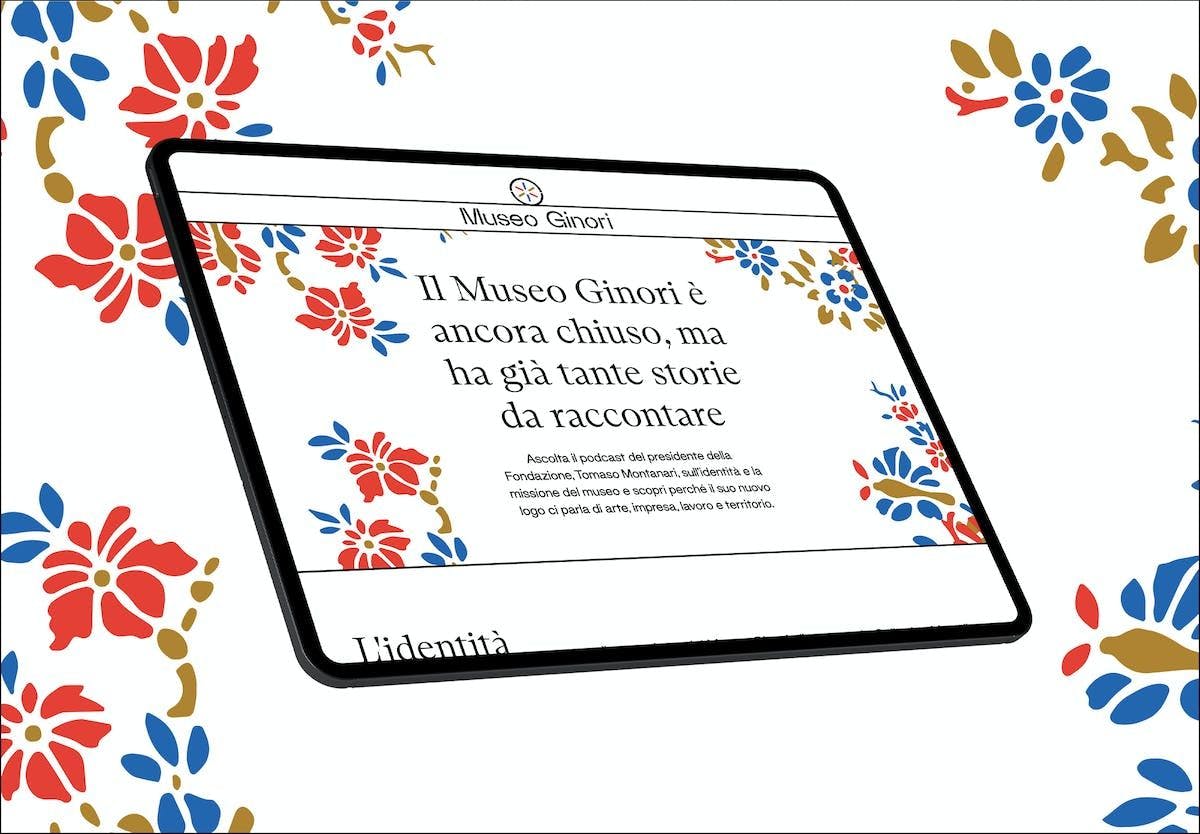
A website that makes the fascinating, rich history of the Richard Ginori brand accessible to everyone, without discrimination or barriers, offering content that inspires visitors and supports researchers.
Learn more:
Elena Casadei


A highly accessible, visually striking website that tells the story of young vigneronne Elena Casadei's vision of modern amphora winemaking.
Learn more:
Italian Tech Week

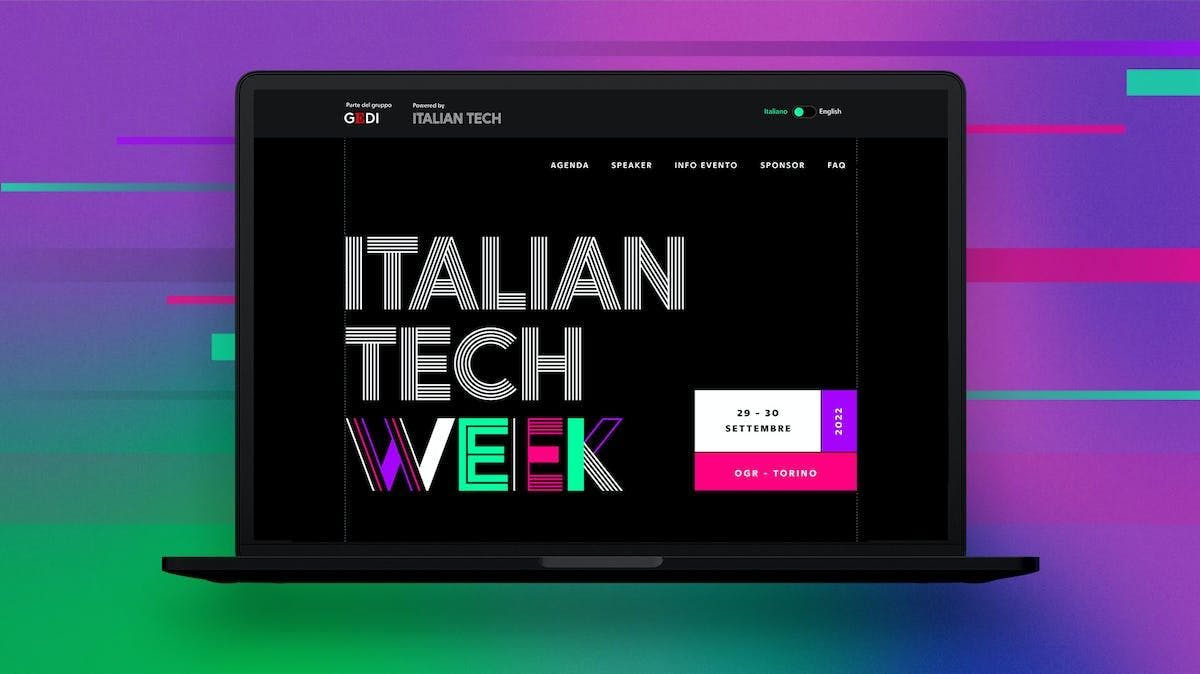
A website for Italy's leading technology conference with a dual role: an accessible guide to the event and a platform for promotion and communication.
Learn more:
Dipartimento Trasformazione Digitale

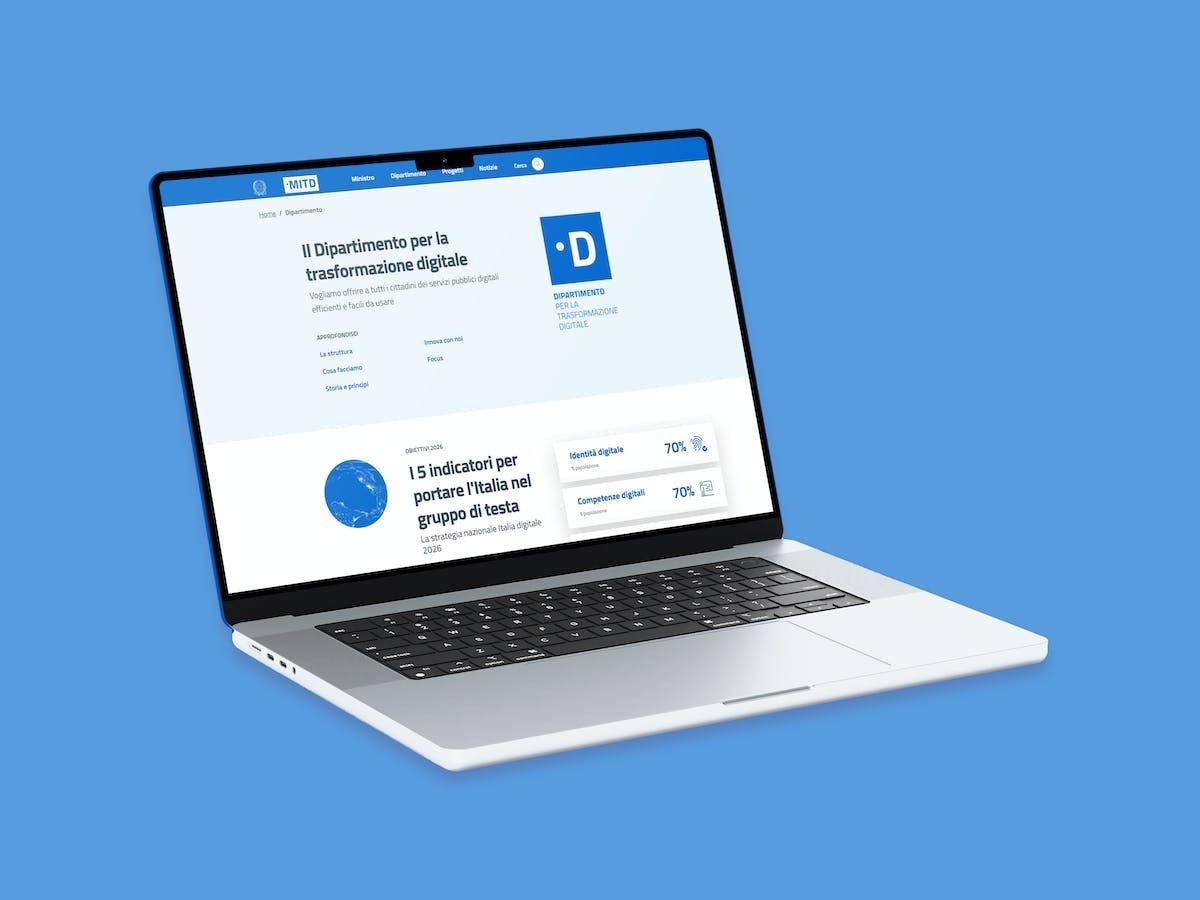
A redesign of the Dipartimento per la Trasformazione Digitale website, bringing it up to the state of the art in speed, accessibility, scalability and readiness for a multi-experience future.
Learn more:
Conclusions
In this article, you learned why the EAA, the European Accessibility Act, matters and how it will shape the websites of the future. The most effective way to comply is to rely on a digital partner with years of industry experience.
That's because the accessibility landscape keeps evolving, with new technologies and interaction models constantly redefining the standards. To meet these challenges, it's essential to listen to accessibility experts with a proven track record.
Thanks for reading! Get in touch with any questions, comments or proposals.


