

Gallerie degli Uffizi: one year later


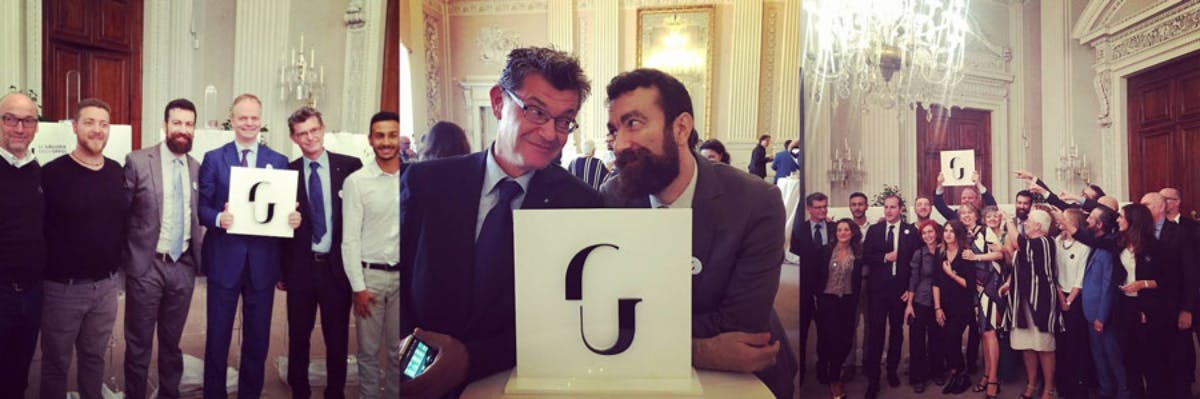
A few weeks ago, the Gallerie degli Uffizi presented the results of their 2018 visitor numbers. At Cantiere Creativo we like to think that the new website contributed to the remarkable growth achieved in 2018, and that makes us proud, both as an agency with a Florentine heart and as the technology partner that designed and built, and today maintains and evolves, the website platform.
When we found out in spring 2017 that we had won the tender, we honestly felt as much uncertainty and doubt as enthusiasm: how would our experience across the private sector, from startups to large corporations, translate to public administration? We didn't yet know that in 2018 we would be working with the Team per la Trasformazione Digitale on tools such as SPID, PagoPA, Public Code and AgaveCMS, and that our method would work beautifully.
Now, one year after the launch of uffizi.it, we can say with satisfaction that the challenges set at the start of the project are still being met successfully, both in the quantitative and technical aspects we can measure in numbers and in the qualitative and human ones.

So what are the website's numbers?
Here's an overview of the site's numbers:
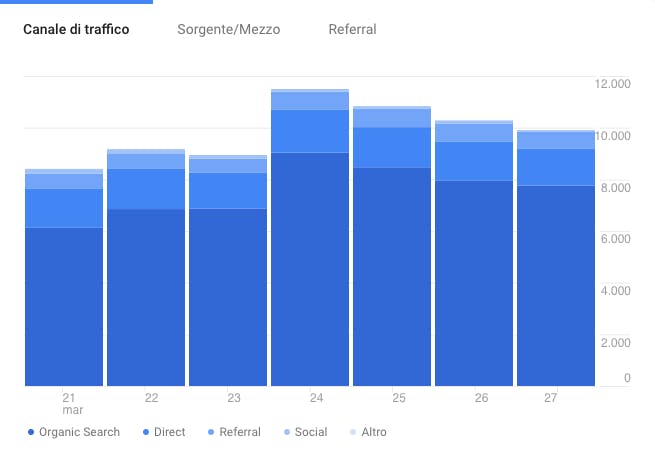
- Average daily visitors rose from about 2200 at the end of 2017 to over 5000 in the last months of 2018, reaching more than 9000 in the first three months of 2019.
- The site passed 1.1 million page views in March 2019 alone, a substantial increase from 650 thousand in March 2018.
- The bounce rate is about 45%, and the average session duration is 3 minutes and 15 seconds.
- On average, there are 85 concurrent users on the site.
- The most visited event on the site was the exhibition of Leonardo da Vinci's Codex Leicester.
- The most visited promotion was the 50% discount on Palazzo Pitti tickets for early-morning entry.
- The most read article was the in-depth piece on the Adoration of the Magi, published when the work went back on display after its restoration.

We'd like to highlight the excellent work the Gallerie do in offering consistent, up-to-date content, which they create and publish entirely on their own through the CMS:
- 257 artwork pages
- 12 virtual exhibitions
- 150 events
- 40 magazine articles
- 90 visitor notices
It all starts with mobile
We've known for years that access to web content from smartphones is growing at an impressive pace. How many of us visited our first web page on a desktop computer, with a CRT monitor, through a browser that no longer exists? Yet more and more people today started directly on mobile devices, and the Uffizi's visit numbers are a perfect example:
- Smartphone: 50.5%
- Tablet: 7.1%
- Desktop: 42.4%
That's why it's essential to focus on the site's mobile experience, especially for those who don't find it natural. At Cantiere, the mobile-first approach has been an established standard for years, and here's a definition we really like:
With this approach, website design must start by structuring content for the limited screen size of mobile devices. So you don't start from a layout and feature set conceived for desktop and then adapt them for mobile. On the contrary, you start from the constraints of mobile devices in order to focus as closely as possible on the essential content.
Where do I find tickets?
This is the question most of the site's users have as their starting point. We knew it from our experience with the Grande Museo del Duomo website, as well as the Santa Maria Novella one, and it emerged right away from the Kickoff Workshop we held with the Gallerie team and Carmi Ubertis in 2017.
The numbers confirm it: the tickets page is by far the most visited (21% of visits), and it's second only to the homepage as an entry page (20%).

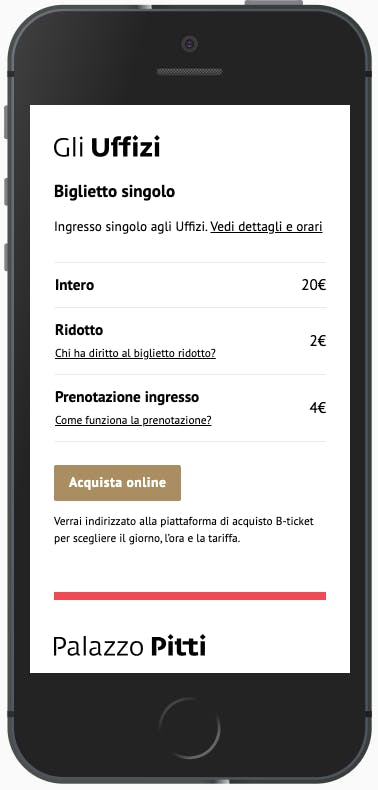
That's why it has been constantly studied and improved, leading to two rounds of design with specific goals: drawing users' attention to the exhibitions and cultural offering of Palazzo Pitti, promoting annual passes alongside single tickets, and explaining the new seasonal prices and entry booking options more simply.
Steady growth in visitors
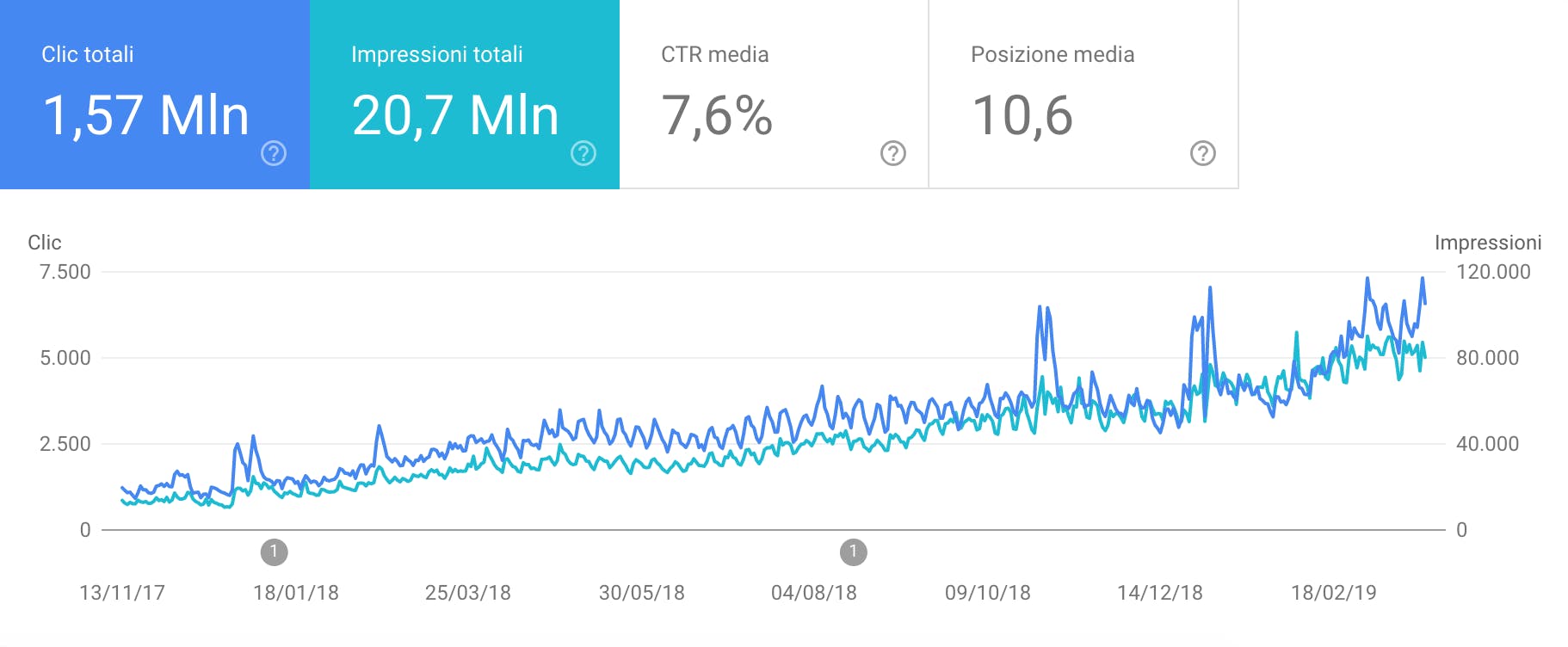
The site's organic traffic is its main entry channel and keeps growing steadily, a sign of the excellent work done by the Gallerie team on both content and page metadata. On the technical side, we implemented Google's recommended best practices from day one, and it paid off.
One of the main goals of Director Eike Schmidt, an important and essential presence throughout the design phase, was precisely to outrank the so-called “scalpers”, the unofficial websites that sell tickets online at a markup, taking advantage of the lack of a proper official website as a “competitor”.
From September 2017 to September 2018 there were 1.1 million unique visitors, with an average of 6000 sessions a day. Impressions on Google Search, meaning the number of times the site appeared in the results when a user searched, reached 22 million. Today, searches for “biglietti uffizi” and “uffizi tickets” show the official website in first and second position.

Analytics tools
To make the product measurable, and therefore understand whether each change is actually an improvement, we adopted Google Analytics, Mixpanel and Metabase. Metabase in particular lets us monitor the internal structure of the web platform to understand what to change “behind the scenes”.
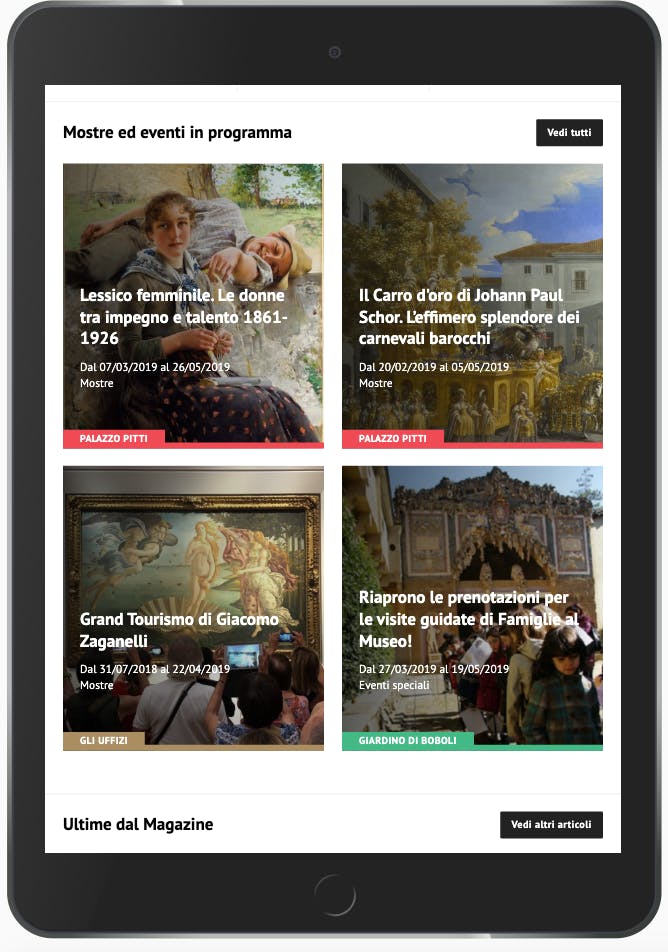
Thanks to these tools, the information architecture of the Magazine and Events sections was studied and redesigned to improve categories, navigation and, more generally, access to this content. The result was much greater use of the Magazine, with many articles added every month and featured on the homepage as well.

How we work
Every project has a turning point in the client relationship, usually once solid mutual trust has been established and the way of working has been well tested by both sides. That's when the fun begins. With the Uffizi, this moment came when we fully adopted the method Cantiere has developed and refined over the years: defining goals with stakeholders, allocating the budget to work sprints, regular sprint planning and detailed reporting.
Adopting these practices in a context so far removed from our usual habits is a success that credits every member of the project team, at both Cantiere and the Gallerie, and it's the solid foundation that lets us work together productively and in harmony.
Next steps
During the presentation at Palazzo Pitti we said: we worked to show once again that it's possible to “do things right”, even if the path can be long, winding and full of obstacles. We believe we've kept that promise and, for as long as we can, we'll do our part to make 2019 as successful as the year before.


