
How to design a User-Centered experience
In this article we show how we design an experience at Cantiere Creativo: starting from the client's idea, moving through the psychological profiling of the users who will populate our product, all the way to the design of the first version (the MVP) and usability testing.
The methodology we use is called Design Thinking, and over the past three years we have applied it with more than 80 clients, with excellent results in delivery times and in the quality of the experience.
Let's get started 👉.
In this article we show how we design an experience at Cantiere Creativo: starting from the client's idea, moving through the psychological profiling of the users who will populate our product, all the way to the design of the first version (the MVP) and usability testing.
The methodology we use is called Design Thinking, and over the past three years we have applied it with more than 80 clients, with excellent results in delivery times and in the quality of the experience.
Let's get started 👉.


What is Design Thinking?
Design Thinking is a methodology that emerged in the 2000s at Stanford University, California.
Over the past twenty years it has evolved countless times, but its core principle has stayed the same: designing a product around the user's needs.

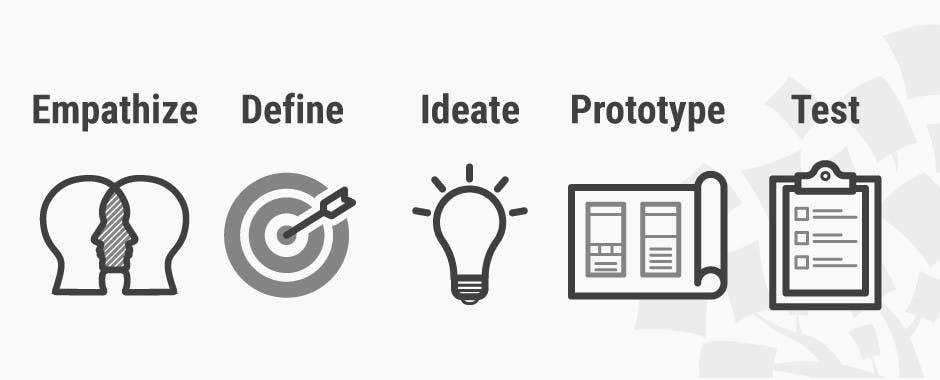
The image above introduces some aspects of the method (which we are about to explain). Our UX team has defined and refined a set of exercises to reach this kind of result: creative sessions, workshops, interviews and more.
In this article we'll see how to turn an idea into a product, starting from the psychology of everyone who will interact with our product idea.
Let's take a closer look.
First things first: workshops, not meetings
All the sessions we're about to describe are run as workshops, meaning around a table with sticky notes, markers and paper.

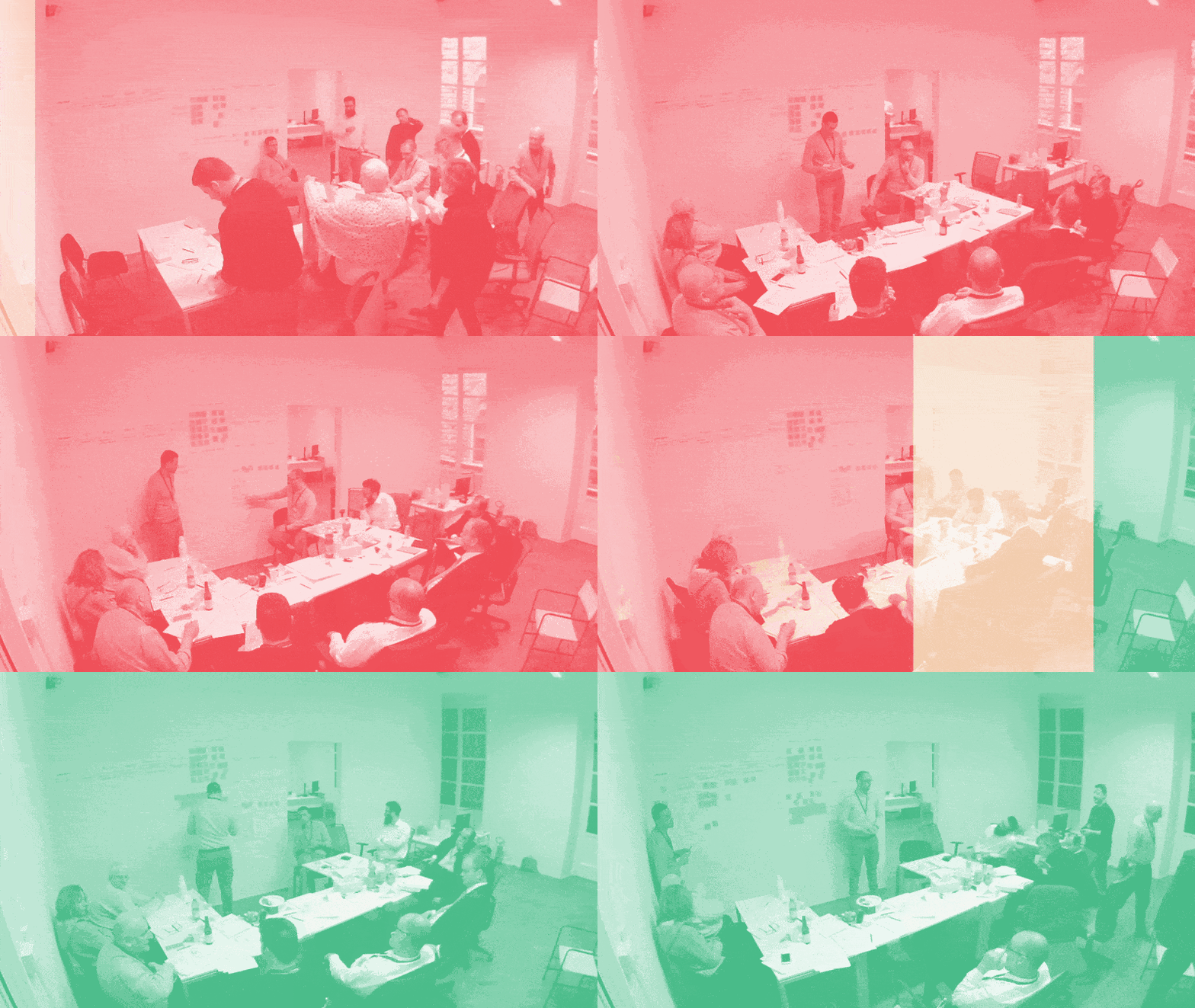
Why a workshop?
Because this is how meetings usually go:
- We start with a topic to discuss
- New issues come up during the discussion
- Someone goes off on a tangent with one of these issues
- The meeting produces nothing useful
- We schedule another meeting
All too often, an endless tunnel of chatter.
Here, instead, are the benefits of a workshop:
- It is coordinated by a person called the Facilitator
- The discussion is guided by sticky notes that fill in a precise framework (canvas)
- Creativity is stimulated through focus exercises (more on these later)
- It fosters shared understanding (we reach decisions together without forcing too much convergence)
- It produces well-organized output that feeds the next phases
Now let's look at the phases that take an idea through to development.

Session 1: Kick-off Workshop, part 1
Duration: 4h
Participants: 5 max (ideally including the Decision Maker)
What it involves
We try to unpack the following aspects:
- Why are you investing in this product?
- What goals do you want to achieve?
- What problems do you want to solve?
- What beliefs do you hold about your product's market?
- What are the biggest risks you face with your product?
- Who are your competitors?
- What are the strengths of your organization?
- What is your vision/mission?


This first session not only lets us clarify some of the boundaries that will shape our own product design phase, it is also eye-opening for clients who are turning their entrepreneurial eye to the internet or to technology in general.
Don't forget your ROI
If you are investing time and money in a tech product, you need to be clear about your ROI (return on investment)
And we're not only talking to those who want to take on the market with new tech ideas, but also to production managers or CEOs who want to boost their employees' performance. In that case, ROI is defined by parameters such as employee work performance (speed, efficiency, fidelity, etc.).
Session output
At the end of the morning, the Facilitator transfers all the paper material into a digital board (built with Miro) that summarizes, as sticky notes, everything defined during the workshop.
Session 2: Kick-off Workshop, part 2
Duration: 4h
Participants: 5 max
What it involves
In this second session we get to the heart of our work: studying the proto-personas.
We map out the mental model of the proto-persona (what they think, what they need, their fears, urgencies, etc.) and then build a User Journey Map (UJM) tailored to that mental model. From the UJM we draw our first solution idea.
That's the summary; now let's explain it in more detail.
What are proto-personas?
Our personas are archetypal users of our product, validated through surveys and market research. Each of these personas is given a name, a role, an age, psychological traits and so on.

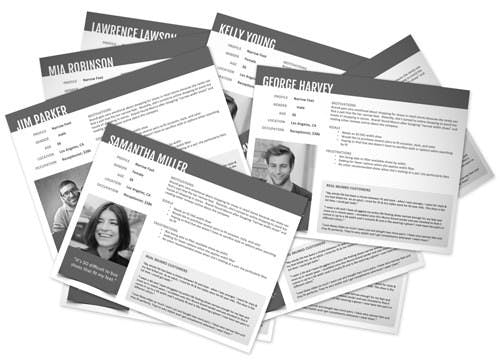
The term “persona” is preceded by “proto-” when it has not yet been validated, that is, when no interviews have been carried out to verify the data we assumed in describing the mental model.
A proto-persona example
Let's take a proto-persona we actually developed recently for a Cantiere Creativo project:

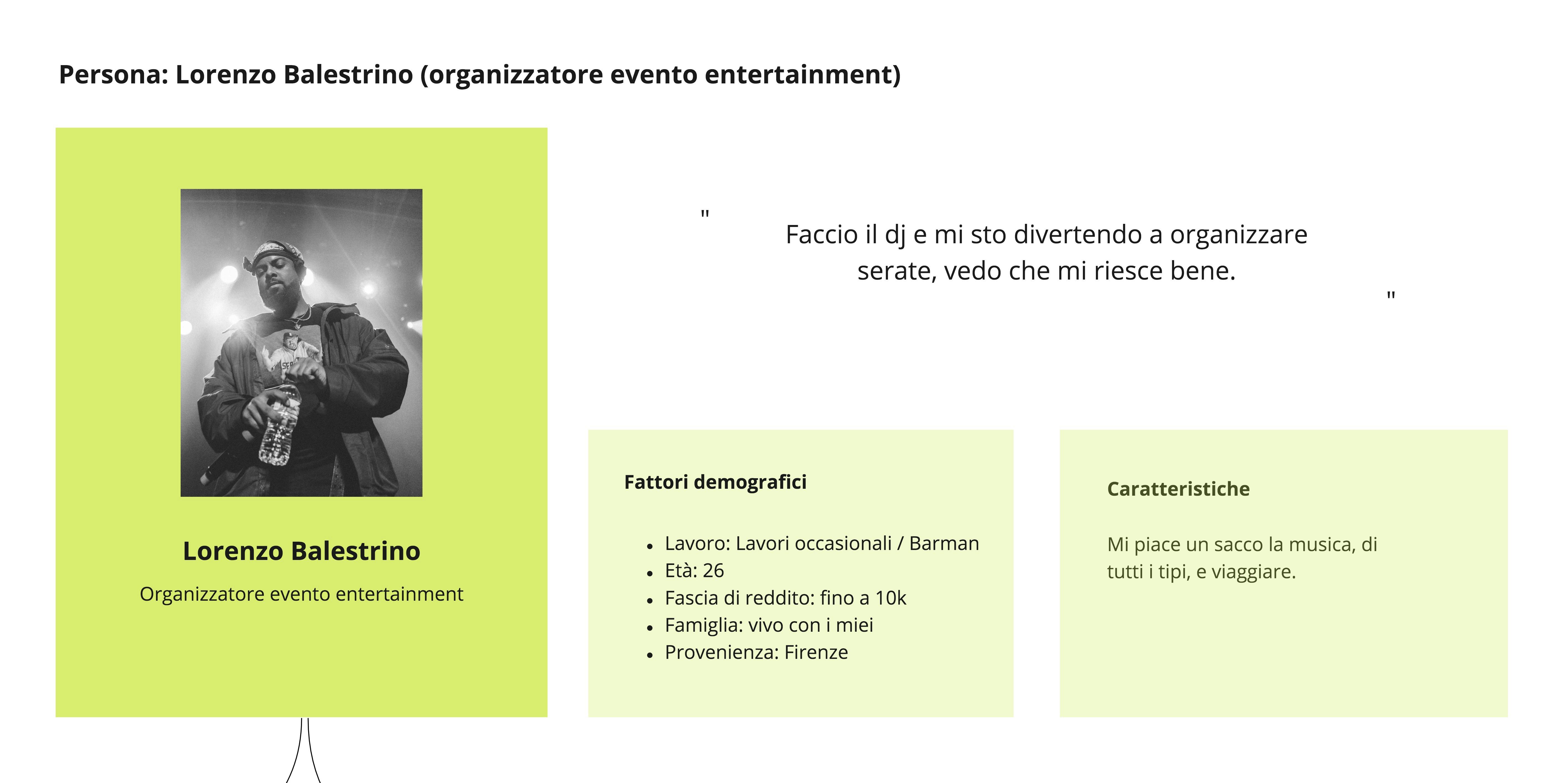
This persona includes:
- An image depicting the character
- First and last name (made up)
- The type of proto-persona
- A sentence that briefly describes their social identity
- Demographic factors that influence their behavior
- Other psychological traits
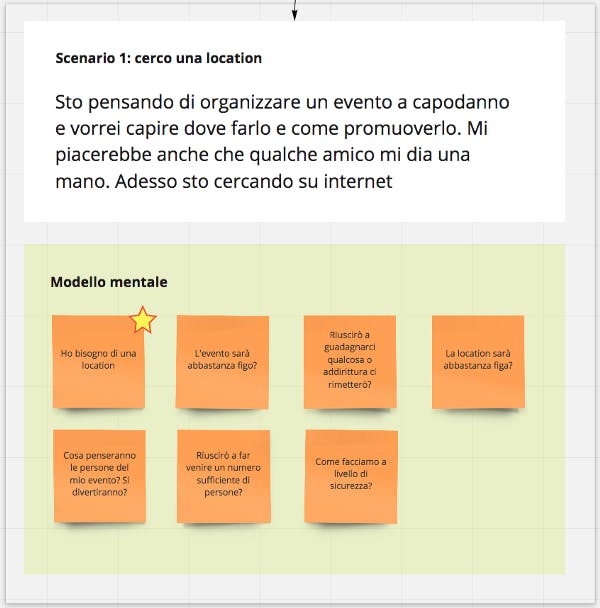
For this persona, the event organizer, we defined two scenarios:

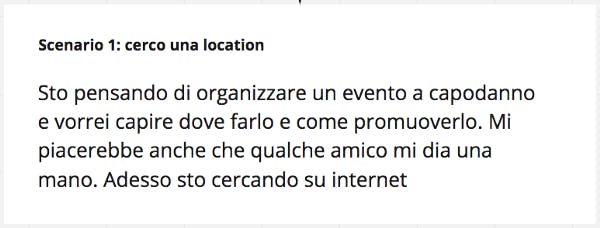

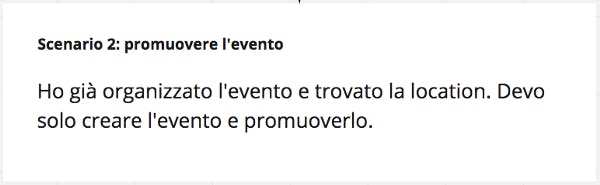
Each of these scenarios comes with a mental model: the needs, desires, problems, anxieties and fears a person has given the starting scenario:


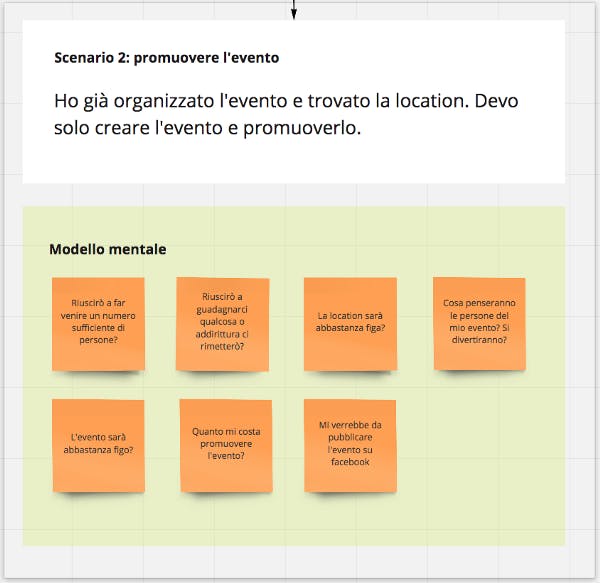
The next step is the User Journey Map: taking every element of the mental model and designing a tailored solution.
Let's see how.
Session 3: Design Studio Workshop
Duration: 3h — 12h (depending on the project)
Participants: 5 max
What it involves
Now we sketch out answers to all the questions and concerns the proto-persona has in their mental model.
We sketch them through an exercise called individual focus.
What is individual focus?
Each participant gets an A3 sheet, markers, and the proto-persona and base scenario we want to explore.
We set aside 30 minutes to 1 hour, during which everyone, quietly and in their own corner, sketches their own solution. Participants can use an internet connection and browse examples in showcase galleries or, above all, among competitors.
When time is up, each participant presents their solution, we discuss it and finally merge all the solutions into one. This solution becomes our first piece of work: a very small version of it (the MVP) that we can build together, with the goal of investigating the proto-personas and the solutions designed for them.
MVP: Minimum Viable Product
Our approach avoids building an entire platform only to discover its flaws (and whether it has a market) after many months of work. Instead, we build a small part of the product right away so we can test it as soon as possible, ideally already on the market.
Continuing with our example, let's see what our first MVP was.
First MVP: a User Journey Map called a Funnel chain
There are many ways to draw a UJM; in this case we chose the form of a funnel chain.
Remember that a User Journey Map is simply the experience system we design based on the needs, problems and desires we mapped through the proto-personas.
As an example, let's take scenario 2.
The solution at the end of the Design Studio workshop was the experience we're about to describe, from the point of view of the proto-persona Lorenzo Balestrini.
Scenario: I've already organized an event and I want to promote it.
Funnel chain:
- I'm on Facebook and see an ad promoting an article called “5 ways not to lose money on your event”
- I click and start reading this interesting article
- In the body of the article I find a reference to a platform the authors are building, meant to help people like me organize events better. All for free…
- I also read that they are selecting ten people (amateurs included) in the Milan area, who will get a venue, support, custom swag and more to celebrate the brand's launch. All for free… why not take part?
- I click through to the page promoting this and leave my email
- Over the following days I receive a series of emails. The first one thanks me and introduces me to the world of these people who work in events
- The second, third and fourth emails are tips & tricks on how to organize an event well
- The fifth email tells me I've actually been selected! They'll call me tomorrow to get to know me and see whether they can sponsor my event
- I get contacted and receive one-on-one support for a month while organizing my event
- I grow very fond of how kind and helpful these people are
- I share the whole organization process and the event itself on Instagram
- I spread the word about the platform
This Funnel chain was formalized and developed over the following two weeks.
We built the entire funnel and set up all the tools needed to monitor the personas' behavior (Hotjar, Google Analytics, Optinmonster, Mixpanel, etc.).
We monitored the data, and the results we observed became the basis for the following Design Studios.
Next Design Studios
The case we just presented didn't only follow the User-Centered methodology, some of whose key aspects we've just covered; it also adopted a strategy that is Data-Driven. In other words, every decision and every subsequent Design Studio was guided by the data collected.
A Data-driven approach isn't mandatory, but it is recommended.
Final recap
Each Design Studio therefore outputs the design of an MVP.
This MVP could be a funnel chain (as we've just seen), a small piece of a website we want to test on a sample of users, a series of interviews, a prize contest and so on.
Over time, the sum of the MVPs builds a product that shows tangible results after one month of work instead of six or nine.
Benefits
The benefits of working this way are countless:
- Clients who work with Cantiere Creativo not only see their idea come to life, they also get real entrepreneurial training
- Working in workshops creates a team that believes in the product and so we move away from the “just build me this” dynamic where love for the project gets lost
- We go live quickly, which lets us validate the market and sharpen our product idea
- We build a Sense and respond engine: a conversation with our users that lets us steer our strategic choices based on their real needs
- Working User-Centered prevents the problems that come from overconfidence in one's own idea
Come and visit us!
You can drop by anytime for a chat, and we'll be happy to offer you pastries and coffee! We know every case is different, and we love discovering new projects, for which we always tailor our way of working.
See you at our Headquarters!
🤜 🤛


