

Uffizi Decameron - How Beauty Is Saving Us from the Contagion
For three years we've had the privilege of working with the Galleria degli Uffizi, and seeing the website we designed together become one of Europe's most comprehensive museum presences in the digital sphere fills us with pride and satisfaction. But what happened this past week, with the museum closed because of the outbreak, is extraordinary. Today we want to tell you a story about technology, but above all about beauty triumphing over isolation.


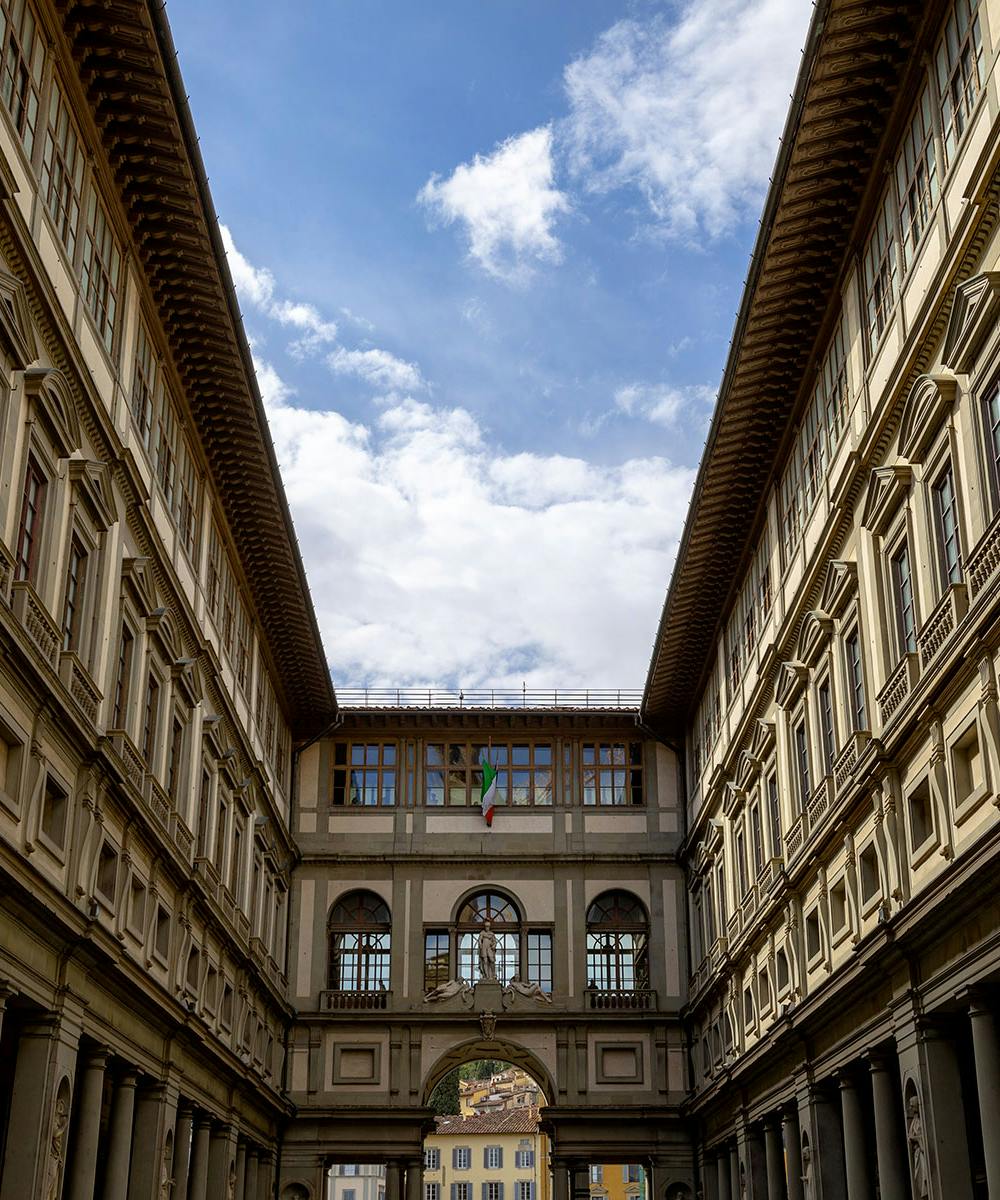
The Uffizi website
Before we tell you what happened over the past few days, we need to take a step back and talk about the technology under the hood of that gorgeous car that is the Uffizi website.
The challenge our team faced was creating a stack that could handle large volumes of traffic while developing a custom CMS installed on proprietary servers as requested. A purely dynamic solution would have made it harder to maintain acceptable response times, especially from places physically far from the machines, while a purely static one would have required a SaaS, that is, subscription software. That's why we chose a hybrid solution: the CMS, developed in Ruby, is dynamic and lets the Galleries' editors create new content in real time, but published pages are rendered static and served to users from cache. This approach let us keep the architecture stable, give the Uffizi physical ownership of the machines and deliver excellent performance to users.
(Between us, we had to cheat a little: given the highly visual nature of the site, images rely on imgix and its global CDN to serve media content, keeping the server-side load extremely light.)
To recap, the Uffizi website:
- has a custom CMS tailored to the needs of its staff;
- offers full control over the security of the machines while requiring little maintenance;
- has a static front-end, making it impenetrable and secure against external attacks;
- is fast for users because pages are static and lightweight;
- delivers high-quality images that load almost instantly thanks to global low-ping servers.
Thanks to the outstanding work of the Uffizi team, which has produced hundreds of pieces of content every year to skillfully convey the wonder of walking through its museums' halls, traffic to the site has soared year after year, reaching 1.1 million people after just the first year online.
Although many users came to the site for information on tickets, opening hours and temporary exhibitions, over time the Uffizi created dozens of virtual exhibitions, called iperVisioni, that take users on fascinating journeys through art and culture, with academic rigor and meticulously precise bibliographies. While many institutions rush to hide their treasures behind a ticket, the mission of the Gallerie degli Uffizi, ever since the new site launched, has been to bring the physical and digital worlds as close together as possible, at a time when comparing the two experiences was practically impossible. This is an important detail; keep it in mind, because it will come in handy a few paragraphs from now.


The Cantiere team's work
With the institution doing extraordinary work, our goal was to make sure every department was properly represented and that its daily work on the website was accessible within a few clicks to anyone who needed it. So we worked hard on optimizing the user experience, testing the results and working directly with the Uffizi team, and on the stability of the technology stack; with traffic growing fast and given the importance of the service the museum complex provides, we couldn't afford outages or hiccups of any kind. After plenty of testing and experimentation, over the past year we reached a truly satisfying result. Thanks to caching optimizations with Varnish and moving the content to DigitalOcean to scale the architecture with traffic, reliability is now literally perfect: the site hasn't had a single outage in the last 6213 hours. That's more than six months of uptime despite six million page views. We knew the website was stable, but this difficult March surprised even us.
The Gallerie degli Uffizi during the lockdown
After the government-ordered closure of museums to limit the risk of contagion, Gallerie degli Uffizi director Eike Dieter Schmidt immediately answered the appeal of the Minister of Cultural Heritage, Activities and Tourism Dario Franceschini:
Starting today, cinemas, theaters, concerts and museums will be closed across Italy. A necessary and painful choice. But #cultura can reach people's homes. I ask TV channels to schedule music, theater, film and art, and all cultural operators to make the most of their social media and websites.
With Uffizi Decameron, the Galleries' team is sharing on its social media channels a rich collection of photos, videos, stories and trivia about art and artists, encouraging users to take advantage of the website's many resources to brighten their day and enjoy the richness of our cultural heritage. Because, to quote director Schmidt himself, “let's avoid every contagion, except that of beauty.”

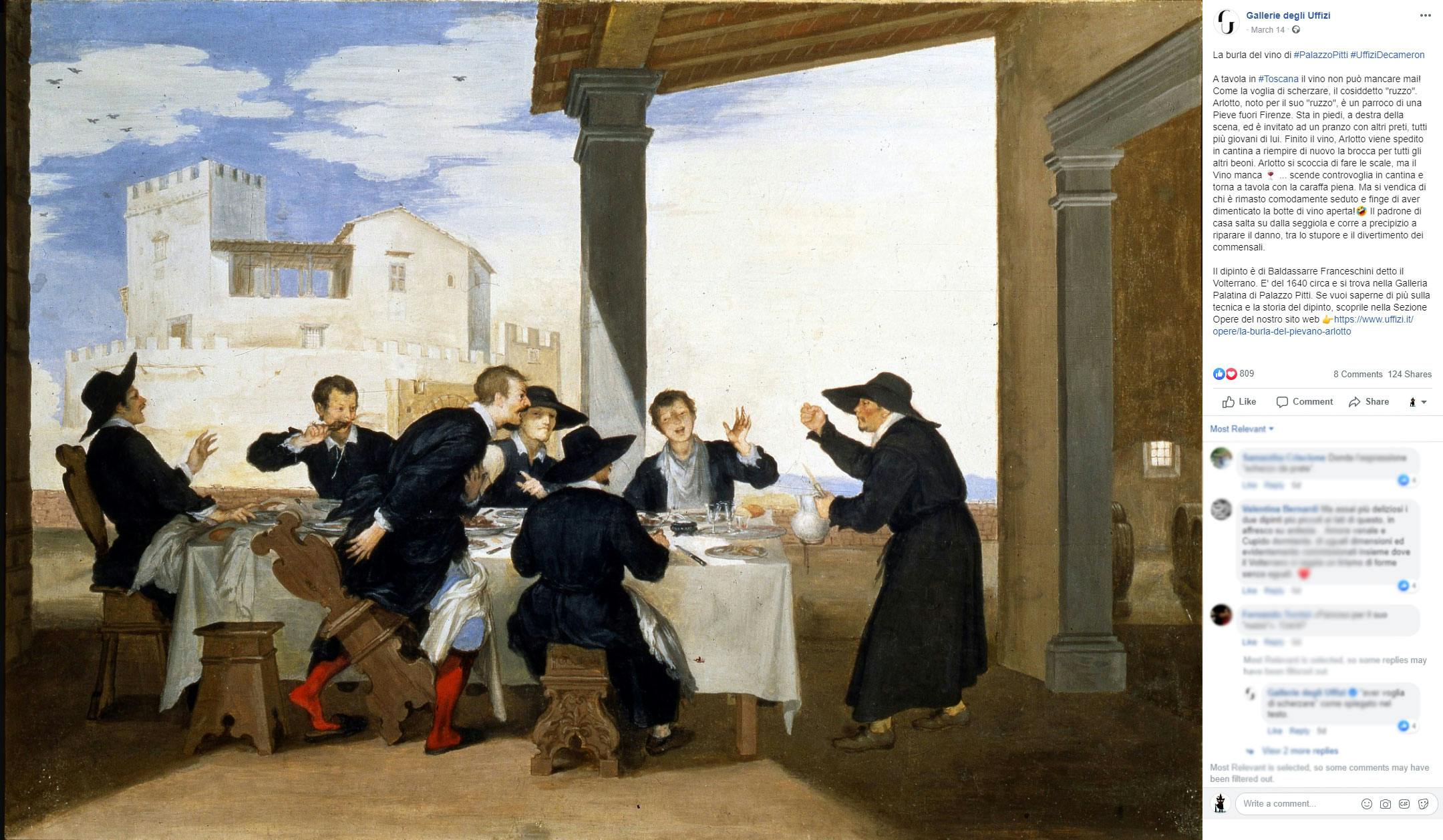
Despite the difficult moment, every post is full of positivity, of joyful anticipation for a spring and a renaissance that will let us embrace again the people we love, the places dear to us and the art that we Italians take for granted, immersed as we are in beauty.


Not only have the teams' efforts to offer digital content to users not stopped, even though they can't convert digital visits into museum guests, they have multiplied out of civic duty and a deep love for the subject. Honestly, the cynical, disillusioned side of me immediately thought: “nice initiative, but we're all terrified and worried here, waiting for the six o'clock war bulletin while desperately hunting for face masks to go grocery shopping. Who has the headspace for art right now?” Luckily, the cynical, disillusioned side of me knows nothing, and the hashtag #UffiziDecameron went viral, with the initiative picked up by many Italian magazines and beyond. A winning communication story, but that's not the surprising part; what's surprising is the impact on the use of the Uffizi website. When we checked the site's performance on Google Analytics, we nearly went pale: in one week the Uffizi website recorded 967,000 users and four million page views. Fortunately, the website withstood the surge, and nearly a million people were able to enjoy the Uffizi's vast range of content without any interruption, in high resolution and with almost instant response times.

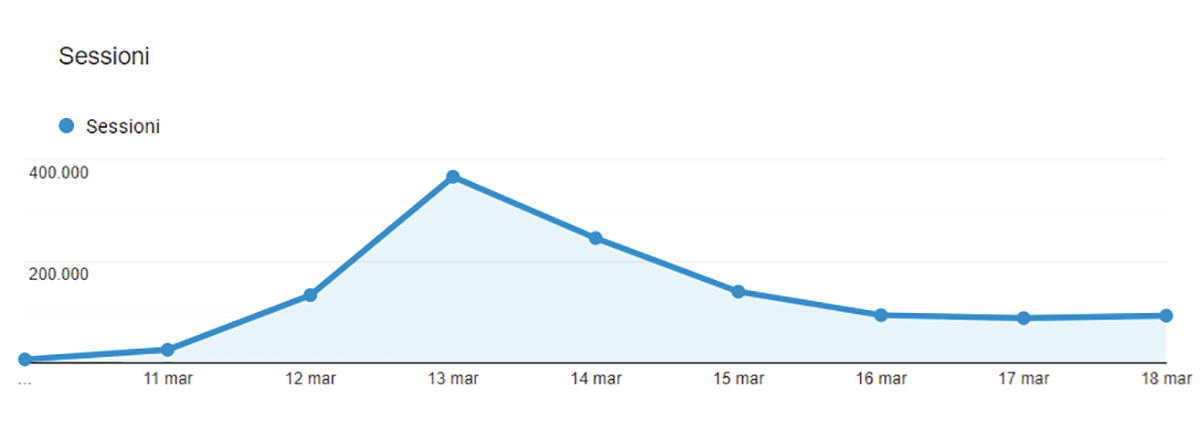
The most viewed sections? The virtual exhibitions, those iperVisioni that often went unnoticed while people looked for discounts or directions to the ticket office, and that now take center stage, showing the world the care, attention to detail and love for art that dozens of professionals have poured into small educational treasures available to everyone. At certain times of day, more than six thousand people were on the website at the same time, almost double the Uffizi's average number of visitors over an entire day. An interest, or rather a hunger, for art and beauty that makes sense in this tragic moment, but that still can't leave you indifferent.
Technology that brings us together
We often talk to our clients (and to everyone, including family members who can't stand us anymore) about how the future of organizations of every kind lies in their ability to provide a service that seamlessly accompanies users from the virtual to the real world and back, with the two realms blending and intersecting naturally throughout the journey. When we talk about it, though, we guiltily tend to focus on technology, on specific solutions or on our, pardon the expression, “expertise”. Yet at the heart of it all there's something else: the choice to use the tools we have to bring people together, to serve them as efficiently and quickly as possible even when physical limits get in the way. Used consciously and ethically, with love and respect for others, technology brings us closer even when we can't touch, and gives us the warmth of spring when we can't go outside, like the wonderful, vivid colors of a Botticelli.


