

Core principles for a digital strategy that works
As we said a few weeks ago, here at Cantiere Creativo we're convinced that technology alone is almost never enough. Without clear ideas, an action plan everyone shares and a long-term vision, no technology can bring significant benefits to either people or business.


How do you set up a digital strategy?
There are many ways to build an effective digital strategy. After years as technology partners to institutions, companies and organizations across all kinds of industries, we have developed our own method that we believe works perfectly for successfully managing such a delicate process. We talked about it here a few weeks ago. We've used it successfully for our internal projects, such as DatoCMS or our work planning tools, and it has proven flexible and agile enough to underpin every solution we build, whether editorial, design or technology. Our method is based on a few principles we think could help anyone who wants to set up or manage a digital strategy.
Never fall in love with an idea
The first mistake in a digital strategy is starting from a solution without even analyzing the problem. We've lost count of the times we've had to tear down a project's assumptions, forcing ourselves and the client to accept that the end result would be radically different from what they expected. Sometimes the context requires revisiting the basics before innovating, and sometimes failing to innovate boldly means disappearing from the market; until you validate ideas and study the risks in detail, though, it's not that easy to tell which.


Work with diverse teams
An editorial technology solution might need a marketer's point of view, while a design system might need the unique sensibility of a salesperson. The moral is clear: it's unwise to work on digital strategies without involving different professionals and perspectives that can look at problems from unique angles. Over time we've noticed that handling the strategic side with a cross-functional team has led to better, longer-lasting results in less time.
Capture reality
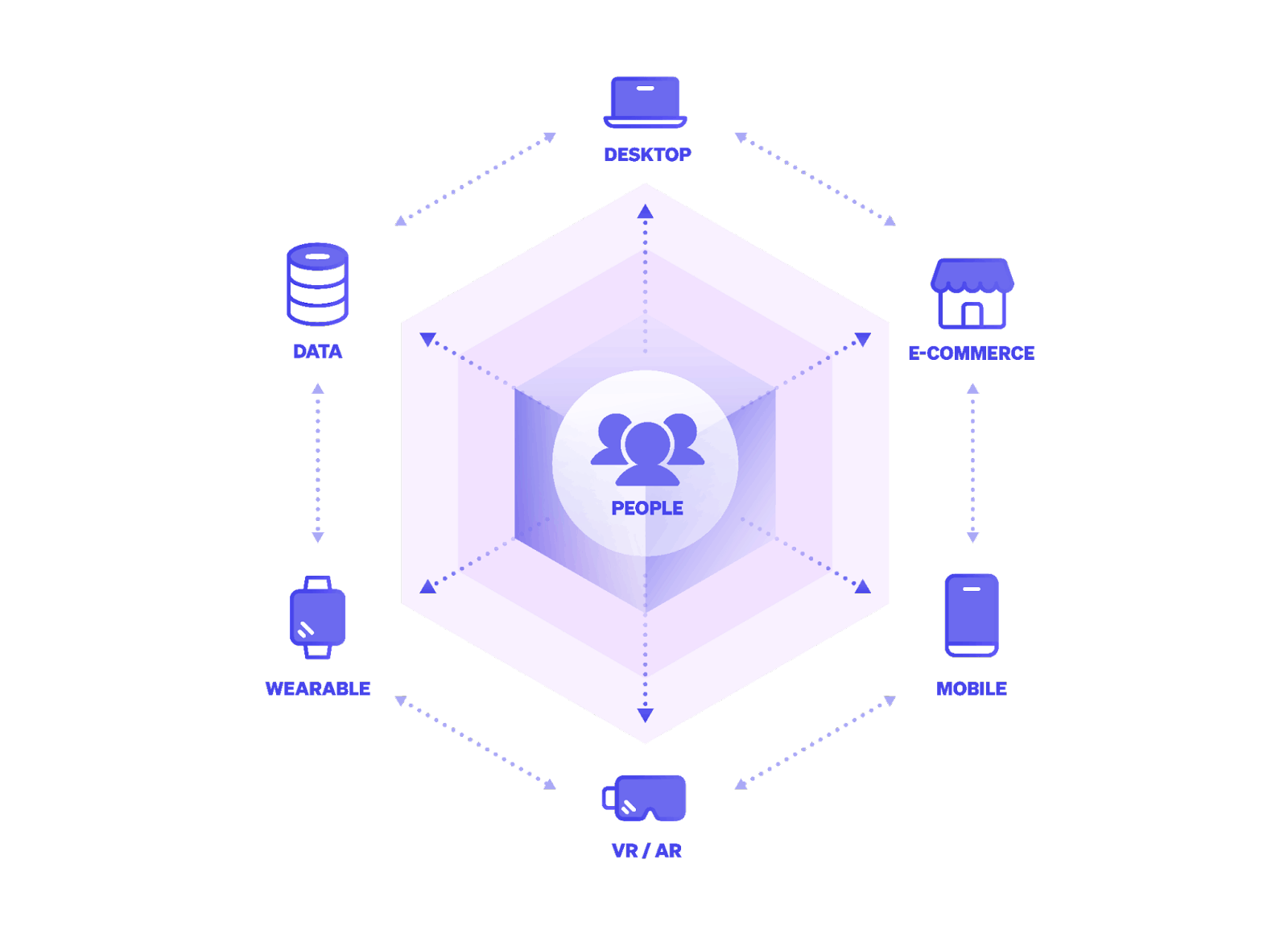
All too often a digital strategy starts from assumptions and wishes without considering the real context the company or organization actually operates in. An effective digital strategy is designed to solve people's problems, whether employees or customers, while bringing value to the company. That's why it's important to gather information from the people who use your services or products, through rigorous user research, interviews and real usage data. This work often needs to be repeated with your staff too: problems in various offices or internal departments, caused by inefficient tools or processes, can block any lasting progress. There's a reason we've moved from user-centered to the concept of people-centered solutions: a frictionless, effective digital experience for everyone leads to greater efficiency, happier employees and better financial results in the medium term!

Study real market trends
Macro and micro trends are essential to understanding where the market is heading. Technology is changing faster than ever before in human history, and those changes bring new behaviors and habits with them. Reading these trends in time and adapting to them is key to building a digital strategy that works. There are three things to analyze when it comes to trends:
- the needs of existing customers and emerging usage patterns;
- the channels, positioning and technologies used by direct and indirect competitors;
- the innovative possibilities, tools and technologies that will shape the industry over the next five years.
Missing the trends and stopping at the surface of technology doesn't bring the expected benefits. Think of the (luckily short-lived) obsession with chatbots as a cure-all for customer care. While chatbots have been essential for cutting costs considerably and filtering out simple support tickets, is there a customer who actually prefers them to a human contact and sees them as a benefit?
Analyze and interpret the data
The data and information gathered must then be distilled into insights and concepts that are easy to use. The idea is to reframe the goals and identify the action plan with the lowest risk and the best chance of success. This is the phase where you need to ask questions and provide answers that serve the goals and the budget. At Cantiere Creativo we meet this need with full Design Studios, taking all the time needed to understand the data and turn it into something with clearly defined development boundaries.


Test the strategy's real feasibility
Hypotheses can be refined extensively over several phases, but a digital strategy often needs field experiments, such as a Proof of Concept or limited-scope integrations, to see whether our insights actually translate into real results. You don't need to test everything, just focus on the aspects we're least sure about and that could sink our strategy.
Produce a document everyone understands
All the work done must be distilled into material that is clear to everyone, including those who weren't involved in creating it. This document, or set of documents in more complex cases, will be the keystone of all future digital activities and the compass for navigating the world of technological innovation.
There are no shortcuts
At Cantiere Creativo we worked for almost ten years to reach the point where we consider ourselves capable and skilled at creating, managing and updating digital strategies across industries. The method we've developed took considerable effort, many iterations and a handful of more or less spectacular failures. What we've learned is that there's no way to build digital strategies without going through very clear phases, flexible but unavoidable, that require many different professionals, obsessive time management and meticulous documentation. If you don't think you can do this work with your in-house resources, it's better to bring in technology partners who can help you build a digital strategy tailored to you.


