

Why multichannel is a strategy to leave behind
Multichannel is the natural evolution of single-channel and for years it was the benchmark in marketing and communication. A multichannel strategy means being present on several channels with targeted campaigns, each managed independently of the others.
This lets you reach a wide audience, but it does not make multichannel a strategy without drawbacks. On the contrary, companies are investing more and more in omnichannel, having realized that multichannel is now an outdated approach.
Multichannel is the natural evolution of single-channel and for years it was the benchmark in marketing and communication. A multichannel strategy means being present on several channels with targeted campaigns, each managed independently of the others.
This lets you reach a wide audience, but it does not make multichannel a strategy without drawbacks. On the contrary, companies are investing more and more in omnichannel, having realized that multichannel is now an outdated approach.


Let’s look at what multichannel means, the drawbacks of this approach and why you should consider moving to an omnichannel strategy.
What does multichannel mean?
Gartner defines multichannel as what enables companies to define, orchestrate and communicate offers to customers across websites, mobile devices, social media, direct mail, call centers and email. Specifically, a multichannel strategy is a way of selling and communicating in which each channel operates independently of the others, with different goals, means and tools.
Multichannel therefore gives a customer or user many options to choose from, each one different from the others and tailored to its specific channel. In other words, a multichannel strategy gives the customer a personalized experience specific to each channel.
More specifically, multichannel can cover both online channels such as websites, blogs, apps and email, and offline channels such as television, newspapers and physical stores. At its core, a multichannel strategy is about being present on several channels to increase the chance of reaching more people, and with it the number of potential consumers, users and customers.
Let’s get a better sense of what multichannel is and what it involves through some real examples.
Examples of multichannel
An abstract example of multichannel is a user who learns about a product from a TV commercial. The potential customer then visits the manufacturer’s website on their smartphone to find out more, or goes to a physical store to see the product, and finally buys it on Amazon or in the store. As you can see, the customer’s journey has followed several channels, each of which offered them a clearly different experience.
A concrete example is Apple. Aware that most sales happen through e-commerce, Apple decided to change how it runs its physical stores. Instead of focusing on selling products, Apple Stores aim to offer visitors a unique experience that immerses them in the Apple world and lets them feel what makes the brand unique. Customers are not pushed too hard to buy, and the purchase often happens later, online.
Multichannel: pros and cons
The main advantage of multichannel is that end users get personalized experiences on each of their favorite channels. This means offering customers specific products and processes optimized for each point of contact. Multichannel is undoubtedly a step forward from a single-channel strategy, since it lets you reach a wider audience.
At the same time, there are several critical issues that make multichannel an approach to leave behind.
The most obvious are:
- each channel is a world of its own: users now switch from one device to another, and therefore from one channel to another, very often. Since in a multichannel strategy each channel works independently, no information is shared and the end user gets no consistency, losing their progress when moving between channels. So while customers can choose the channel that suits them best, switching from one channel to another can be complicated or even impossible;
- managing several channels is complex and expensive: new technologies keep creating more and more channels. Running a multichannel strategy is therefore very expensive, because it requires many independent teams. And to avoid the scenario described above, you need to integrate data from every channel into a single system, which is cumbersome and complex.
- measuring overall results becomes hard: with many independent channels, each one works with different tools and toward different goals. Collecting and integrating the data to extract results and understand how effective the overall sales and communication strategy is becomes very complicated.
In general, the main drawback of multichannel is that users cannot perceive the various channels as part of a single offer. Instead, they see each channel as an independent platform or system, which inevitably complicates the relationship between a company and its customers.
This problem can only be solved with an omnichannel strategy.


Multichannel vs. omnichannel
As we covered in this article, omnichannel refers to a strategy that aims to offer customers a uniform, consistent experience, whatever channel they use to get in touch. Specifically, Gartner explains that, unlike multichannel, omnichannel is based on the idea that your brand and your company mission are present everywhere, always in the same form.
Gartner also shows that the main difference between the two approaches is that omnichannel allows a more coordinated, data-driven approach guided by feedback from users’ actions. This is only possible if you already know your target audience and the channels it uses. Multichannel, on the other hand, requires context and a deeper understanding of where customers are in their buying journey or decision-making process. For multichannel to succeed, you need to be able to apply this knowledge when planning and executing the strategy, to make sure what you communicate fits both the channel and the customer’s needs.
The result is that multichannel is inherently more complex, as well as more expensive to implement and maintain. It is no coincidence that a PwC report found that the share of companies investing in omnichannel grew from 20% to more than 80% in 2020 alone.
So what does this shift involve, and how can you make it?
How to move from multichannel to omnichannel
Moving from a multichannel to an omnichannel strategy takes time and requires a change in the company’s technology architecture as well as in how the sales and communication strategy is designed. The risk of failure is real, since making this transition alone is risky and complex. That is why we always recommend working with a digital partner who can guide you through the whole process and lead you into the future.
Specifically, as we discussed in more depth here, the easiest way to leave a multichannel strategy behind and embrace omnichannel is by adopting a headless CMS. This technology for managing content and all your digital assets is inherently omnichannel. A headless CMS is designed to give you the ability to manage all your content in one place, whatever the channel, since it relies on APIs to distribute and collect data.
This is especially useful in multi-tenancy scenarios too.
Cantiere Creativo supports the move from multichannel to omnichannel
The first challenge in moving to omnichannel is to understand the implementation risks, map out a clear development path and use a method that helps you reach the market with the best idea in the shortest time.
At Cantiere Creativo we created a solution called Blueprint: a process run by a highly specialized cross-functional team that, through user research, analysis, prototypes (POCs) and real code, designs at the level of detail the product needs, with an eye on real future development.

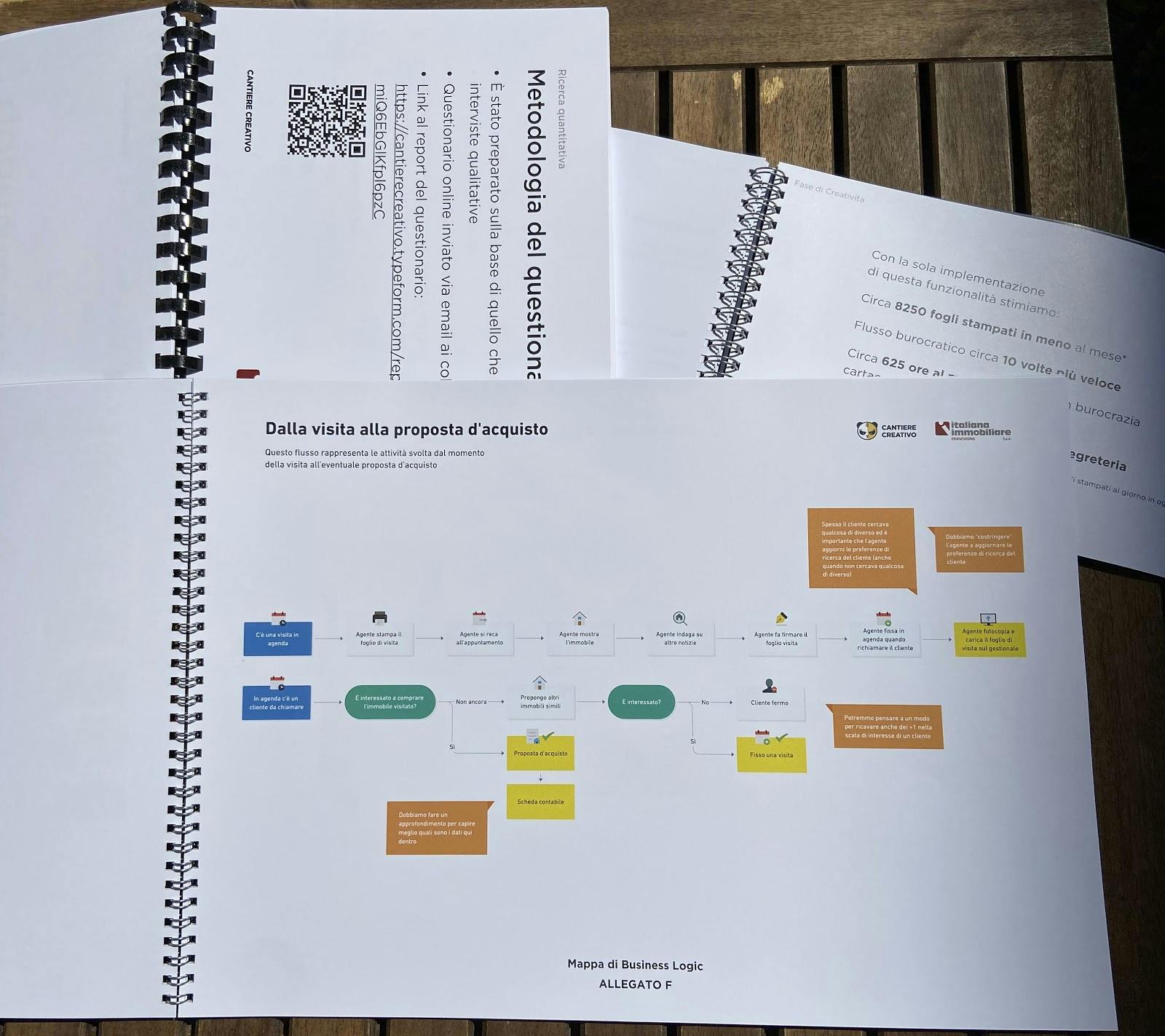
We have used this solution for companies such as Italiana Immobiliare and institutions such as the Uffizi and the MITD. The results let us set up an omnichannel strategy from day one, managing all content in one place and delivering a seamless experience for every user.


Omnichannel was also at the heart of our project for the Polimoda school, where we worked with their team to deliver a unique experience across every channel, always from the same data source: the e-commerce store, the magazine, the official website and the app designed for students.
The omnichannel approach lets Polimoda create new ways to connect with prospective students and partners without starting from scratch.
Conclusion
In this article we looked at what multichannel means, with some examples, and why it is now an outdated and technologically obsolete sales and communication strategy. Its benefits are outweighed by the heavy drawbacks of managing several channels independently. These drawbacks can be avoided by adopting a more modern omnichannel strategy.
In particular, we saw that moving from multichannel to omnichannel requires adopting and integrating the right technologies. This step hides many pitfalls, though. Fortunately, you can rely on a proven digital partner to select the best digital tools for you, integrate them properly and define a successful omnichannel strategy, supporting you throughout the transition.
Thanks for reading! We hope you found this article useful. Feel free to contact us here with any questions, comments or suggestions.


